An International Journal
Agricultural and Biological Research
ISSN - 0970-1907
RNI # 24/103/2012-R1
RNI # 24/103/2012-R1
Research Article - (2026) Volume 42, Issue 1
The study explored the mediation effect of the initiatives, programs, and challenges on the relationship between the waste management practices, impact, and behaviors of 500 high school and college students of selected educational institutions in Dumingag, Zamboanga del Sur, during the school year 2025-2026. Most students preferred disposing of plastic and paper waste rather than burning it, recognizing the high impact of waste management on mitigating climate change. They viewed the issue as a shared responsibility among students, schools, and the community. Their waste management behaviors stemmed from personal motivation, and community initiatives had positive effects by informing the residents of viable waste management options. However, college students faced challenges such as inadequate facilities, insufficient information, and lack of resources, viewing inadequate infrastructure as a significant barrier to effective waste management in schools. The initiatives and programs only partially mediated the relationship between waste management practices and student behavior. Students’ involvement in community initiatives did not significantly affect their perceived impact of waste management on climate change or the behaviors influencing that perception. Furthermore, challenges faced by students in waste management did not significantly mediate the relationship between their waste management practices and influencing behaviors or their perceived impact on climate change.
Challenges; Factors influencing behaviors; Initiatives; Mediation analysis; Perceived impact; Programs; Students; Waste management practices
Waste management is one of the important and pressing issues in the global community. It is estimated that on 2050, a projected 3.4 billion tons of waste annually would be generated. The continuous increase of waste generation causes it management more challenging [1]. Waste management practices pertain to the activities of the participants in relation to how they store, collect, transfer, transport, process and dispose wastes which should be in compliance with the principles of public health and environmental considerations. In the Philippines, Matunog and Awa, [2] noted that some concerns on solid waste management include improper waste disposal, inefficient waste collection and lack of disposal facilities.
When collection and its disposition is not given high priority, public health and the environment would be at high risk. Educational institutions whether secondary or tertiary could be instrumental in addressing the issue and taking the challenge of purging initiatives to address waste management. Students could play a vital role in ensuring a safe environment and healthy community. There may be some factors that could attribute to the students’ behaviors on waste management. These could be their practices, perceived impact, initiatives and programs that they have observed and the challenges they encountered in relation to waste management. Geiger et al. [3] identified the critical role of action-oriented knowledge such as procedural and effectiveness or impact knowledge in determining the pro-environmental behaviors of individuals. However, only few limited have determined the contribution of impact knowledge on the waste management behavior of individuals.
There have been initiatives and programs implemented in schools and in the community to address the prevailing issues on waste management. Most of the initiatives and programs center on waste segregation, recycling, awareness-raising activities, infrastructure enhancements like placing recycle bins [4]. These are directed toward encouraging proper waste disposal and management among students and the community. However, students are still confronted with the challenges which would somehow influence their behaviors on waste management.
It was the purpose of this research to determine if initiatives, programs and challenges mediate the relationship between the students’ waste management practices, perceived impact of waste management to climate change and their influencing behavior on waste management.
Statement of the problem
This study explored the mediation effect of the initiatives, programs and challenges on the relationship between the waste management practices, impact and behaviors of high school and college students of selected educational institutions in Dumingag, Zamboanga del Sur during the school year 2025-2026. Specifically, the following questions were discussed:
• What are the current waste management practices, and perceived impact on climate change and the factors influencing behaviors of the participants?
• What are the existing initiatives, programs and challenges on waste management?
• Is there a significant mediation of the initiatives, programs on the relationship between the participants’ waste management practices, the perceived impact on climate change and factors influencing behaviors?
• Is there a significant mediation of the challenges related to waste management on the relationship between the participants’ waste management practices, the perceived impact on climate change and factors influencing behaviors?
Figure 1, which resembles the three-path mediation model [5], shows the relationships among the variables. In the three-path mediation model, waste management practices, and the perceived impact on climate change served as the independent variables; influencing behaviors as dependent variable; and initiatives and programs, and challenges served as the mediators. Based on the mediation model, the following hypotheses were generated and tested:
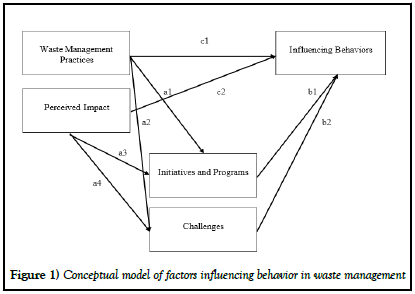
Figure 1) Conceptual model of factors influencing behavior in waste management
H1: Waste Management Practices →Initiatives and Programs →Factors Influencing Behaviors
H2: Waste Management Practices →Challenges on Waste Management → Factors Influencing Behaviors
H3: Perceived Impact → Initiatives and Programs → Factors Influencing Behaviors
H4: Perceived Impact → Challenges on Waste Management → Factors Influencing Behaviors
This study utilized the mediation analysis in exploring the effect of initiatives, programs and challenges on the relationship between the waste management practices, impact and behaviors of high school and college students of selected educational institutions in Dumingag, Zamboanga del Sur during the school year 2025-2026. Correlational analysis was also done to establish the relationship between the variables.
A total of 500 high school and college students served as the participants of the study. There were 200 high school students from Dumingag National Integrated School and 50 students J.H. Cerilles State College – High School Laboratory Department; and 250 students from the Schools of Teacher Education who responded to the adapted questionnaires. Taylor, MacKinnon, and Tein suggested that a minimum of 200 participants could be used as samples for adequate power with medium effect sizes for three-path mediation. A sample of 500 students could be considered as adequate number of participants for the present study.
The adapted questionnaires were utilized. The questionnaire consisted of items on waste management practices, perceive impact on climate change, influencing behaviors, initiatives and programs, and challenges on waste management (Tables 1 and 2).
The responses of the participants were analyzed and interpreted using the following scale:
| Weight | Continuum | Responses/Interpretation |
| 5 | 4.21 - 5.00 | Always (A) |
| 4 | 3.41 - 4.20 | Often (O) |
| 3 | 2.61 - 3.40 | Sometimes (S) |
| 2 | 1.81 - 2.60 | Rarely (R) |
| 1 | 1.00 - 1.80 | Never (N) |
TABLE 1 Waste management practices
| Weight | Continuum | Responses | Interpretation |
| 5 | 4.21 - 5.00 | Strongly Agree (SA) | Very High (VH) |
| 4 | 3.41 - 4.20 | Agree (A) | High (H) |
| 3 | 2.61 - 3.40 | Moderately Agree (MA) | Average (A) |
| 2 | 1.81 - 2.60 | Disagree (D) | Low (L) |
| 1 | 1.00 - 1.80 | Strongly Disagree (SD) | Very Low (VL) |
TABLE 2 Perceived impact on climate change and the factors influencing behaviors, initiatives and programs, and challenges
For all the analysis carried out in the study, the researcher set a probability value of 0.05. All the analyses in the study were performed using Jamovi program. Items of the questionnaires were subjected to face validity and content validity. Internal consistency of the items was determined using the Cronbach alpha coefficient. The face validity was determined using the Aiken’s validity and Kappa Interrater Reliability while the content validity was determined using the Lawshe’s Content Validity Ratio (CVR) and the Content Validity Index (CVI).
With reference to the research model in Figure 1, path c1 and c2 are the direct effects of waste management practices and perceived impact on climate change on the factors influencing behaviors (H1 and H2), controlling for both mediators (initiatives and programs; and challenges of waste management) [6]. The advantage of the three-path mediation model is that the indirect effects of the mediators can be isolated [7].
The product of the three paths a1b1c1 represents the specific indirect effect of initiatives and programs on the relationship between waste management practices and influencing behaviors; the product of a2b2c1 represents the indirect effect of challenges on waste management on the relationship between waste management practices and influencing behaviors; the product of paths a3b1c2 for the indirect effect of initiatives and programs on the relationship between the perceived impact on climate change and the influencing behaviors; and a4b2c2, indirect effect of challenges on the relationship between the perceived impact and influencing behaviors. In the three-path mediation model, the indirect effect of both of the mediators in a series can be analyzed [8].
Waste management practices
Table 3 shows the waste management practices of the participants. These show that the college student-participants always practice segregating recyclables, throwing wastes at designated containers, and using separate bins for different types of wastes. These imply that most of the college students are very much aware on the significance of segregating recyclables from biodegradable wastes based on how they also dumped different types of waste materials separating and putting in proper containers the biodegrable from recyclable waste products. Students were concern of the environmental preservation as manifested by their adaptation on sustainable practices. Placing importance on segregating wastes and following the correct method especially throwing thrash at proper bins could contribute to a cleaner and greener earth. Students are already cognizant on diverting recyclable materials from landfills and recycling processes. This could minimize the environmental impact which are related to disposal of wastes. Proper segregation and disposal of waste could also prevent the possible ill effects on human health and the balance of nature. While the high school student-participants always practice throwing wastes at designated bins. Sometimes the both groups of students burn plastic and paper wastes. The high school students sometimes reduce plastic usage. These suggest that most of the students may have resorted to proper disposal of plastic and paper waste instead of harming the environment created from burning these materials. In line with reducing plastic usage, there are already initiatives at encouraging students to use tumblers instead of bottled water to minimize the use of plastic bottles.
The above findings were supported by the study of Paghasian [9] which revealed that college students in Maigo have good level of waste management practices in terms of segregation, reduction and recycling of wastes. These were affirmed by Gequinto [10] who noted that college students gave the highest emphasis on the promotion of 3Rs (reduce, reuse and recycle). Molina and Catan also indicated that students perform segregation often. The results further indicated that students have good segregation practices as they always separate biodegradable and non-biodegradable wastes before disposal.
| Statements | College | High School | ||
| M | I | WAM | I | |
| Segregate recyclables | 4.28 | A | 4.03 | O |
| Throw wastes in designated bins | 4.36 | A | 4.21 | A |
| Burn plastic and paper wastes | 3.1 | S | 2.94 | S |
| Reduce plastic usage | 3.58 | O | 3.39 | S |
| Reuse materials | 3.97 | O | 3.63 | O |
| Recycle materials | 3.96 | O | 3.71 | O |
| Compost biodegradable wastes | 3.95 | O | 3.6 | O |
| Participate in community clean-up activities | 3.98 | O | 3.52 | O |
| Use separate bins for different types of waste | 4.23 | A | 4.06 | O |
| Remind others about proper waste disposal | 3.96 | O | 3.8 | O |
| Overall means | 3.94 | O | 3.69 | O |
| Note: 4.21 - 5.00 Always (A); 3.41 - 4.20 Often (O); 2.61 - 3.40 Sometimes (S); 1.81 - 2.60 Rarely (R); 1.00 - 1.80 Never (N) | ||||
TABLE 3 Waste management practices of the participants
Perceived impact of waste management on climate change
The perceived impact of waste management on climate change is reflected in Table 4. The perceptions of the students highlighted the very high perceived impact on the importance of mitigating climate change, that actions of the individual student can make a difference, and that waste management is a shared responsibility. The students believed that waste management is a way of focusing on the sources and causes of climate change. Mitigation centers on the root cause of climate change such as heattrapping greenhouse gases that humans add to the atmosphere faster than the earth absorbing the emission of gases. When students are aware of waste management they find ways and means to replace.
Actions that individual students do can make a difference when their practices related to the principle of reducing, reusing and recycling wastes. The students believe that there is a need for them to limit the use of extra packaging, plastic utensils, as papers in order to reduce wastes possible. They could also reuse products like using re-using papers, water bottles, plastic packaging ang bags and dishes instead of disposable ones. These actions could at least decrease wastes, and thus mitigating climate change.
Based on the perceptions of the two groups of participants, it appeared that the college students had an overall mean of 4.55; and the high school students had 4.28. Both groups of students had high level of perceived impacts of waste management on climate change.
| Statements | College | HS | ||
| M | I | M | I | |
| Waste mismanagement seriously contributes to climate change | 4.57 | VH | 4.29 | VH |
| Pollution is associated with waste mismanagement | 4.47 | VH | 4.22 | VH |
| Waste management is important for mitigating climate change | 4.61 | VH | 4.42 | VH |
| Severe flooding is a result of improper waste disposal | 4.53 | VH | 4.24 | VH |
| Individual waste management actions can make a difference | 4.63 | VH | 4.31 | VH |
| Waste management is a shared responsibility | 4.59 | VH | 4.38 | VH |
| Waste disposal is a pressing issue which contribute to climate change | 4.41 | VH | 4.11 | H |
| To change to proper waste habits helps mitigate climate change | 4.57 | VH | 4.3 | VH |
| Overall means | 4.55 | VH | 4.28 | VH |
| Note: 4.21 - 5.00 Very High (VH); 3.41 - 4.20 High (H); 2.61 - 3.40; Average (A); 1.81 - 2.60 Low (L); 1.00 - 1.80 Very Low (VL) | ||||
TABLE 4 Perceived impact of waste management on climate change
Table 5 manifests the factors which may have influencing effects on the waste management behaviors of the students. Based on the self-perceived ratings, the college students revealed an overall mean of 4.19, interpreted as “High.” Similarly, the same perceptions were disclosed by the high school students, however, lower in value (3.70) but still interpreted as “High.” The mean difference was 0.49.
The findings revealed that both groups of respondents, college and high school students have claimed that their waste management behaviors were mostly attributed to the fact that they were personally motivated to practice waste management. Steg [11] and Cecero et al. [12] claimed that personal motivation along with moral obligations, environmental concern and satisfactions play significant influence on the individual’s waste management behaviors. Along this line, Steg [8] noted that many people are motivated to engage in proenvironmental actions because protecting the environment makes them feel good about themselves.
Another noteworthy finding was that both groups noted that better facilities encourage them to practice better waste management. The school’s waste management practices like recycling, segregating, encouraging students to use reusable containers and utilities could be their attributes why the respondents were motivated to materialized waste management in their own ways. Students are one of the most important demographics of sustainable intention and behavior awareness education in order to increase the global culture and rate of recycling efforts [13]. Students are both decision-makers and leaders of the future, and the use of environmental education to impact practices of recycling is important for students.
| Statements | College | HS | ||
| WAM | WAM | |||
| I am personally motivated to practice waste management | 4.46 | VH | 4.19 | H |
| My school offers different programs to practice proper waste disposal | 4.33 | VH | 3.84 | H |
| My community launch initiatives for each household to do proper waste management | 4.28 | VH | 3.81 | H |
| Proper waste disposal facilities in school and in community is accessible | 4.35 | VH | 3.71 | H |
| I receive information regularly about waste management | 3.93 | H | 3.54 | H |
| The LGU is very responsible in promoting waste management | 4.14 | H | 3.81 | H |
| The social media influences my waste management practices | 3.91 | H | 3.42 | H |
| I received education or training on waste management | 3.87 | H | 3.22 | H |
| My friends and family practice waste management | 4.2 | H | 3.58 | H |
| Waste management is part of my school curricula | 4.2 | H | 3.67 | H |
| Better facilities encourage me to practice better waste management | 4.4 | VH | 3.94 | H |
| Overall means | 4.19 | H | 3.7 | H |
| Note: 4.21 - 5.00 Very High (VH); 3.41 - 4.20 High (H); 2.61 - 3.40; Average (A); 1.81 - 2.60 Low (L); 1.00 - 1.80 Very Low (VL) | ||||
TABLE 5 Factors influencing waste management behaviors
Existing initiatives and programs on waste management
As observed in Table 6, the college students disclosed that they had high level of involvement in the existing initiatives and programs on waste management in their respective communities and schools. Their involvement is reflected in their practices like composting and recycling their own wastes. They claimed that their respective schools have initiatives in implementing effective and functional wastes management. These findings indicate that the efforts of the community and school to encourage students on participating waste management initiatives have an impact on their knowledge and practices. This suggests that the initiatives and programs of the communities yielded positive results as these have reached and informed residents on the possible options that community residents could utilize as ways of managing their wastes.
It is also noted that the college students have reached a high level of awareness on the policies and guidelines regarding Ecological Solid Waste Management Act (RA 9003). The school’s efforts in discussing the functional role of educational institutions and the students in the wastes management programs have manifested their active support on the governments’ efforts to promote awareness of its population on the essence of waste management towards ecological balance and preservation. As Reyes and Madrigal [14] explained that when students are aware of the waste management initiatives and programs, the efforts have impacted on the students’ engagement and involvement in promoting these programs.
The high school students revealed different scenarios regarding their involvement on the initiatives and programs regarding waste management. They had an average level of participation in waste management-related activities and organizations. Their participation to workshops and seminars on waste management was low with a 2.28 mean.
It can be noticed that even if some students were involved in waste management related initiatives and programs, there are training and activities where the students lack the interests of participating in. Perhaps, these lack the strategies which could encourage enthusiasm among students to participate. The Why Workshops Don’t Work [15] explained that the low participation of the students in such trainings and programs may be due to the formats that these trainings are delivered, relying on routine and dull practices. In this digital era, most students are triggered with technology-based activities. Workshops that incorporate digital apps and tools may be a good supplement to these.
| Statements | College | HS | ||
| M | I | M | I | |
| I hear composting and recycling programs in our community | 4.26 | VH | 3.94 | H |
| I have knowledge about Ecological Solid Waste Management Act (RA 9003) | 4.05 | H | 3.69 | H |
| I am aware of the community-based waste management programs | 4.26 | VH | 3.91 | H |
| I know about my school initiatives on waste management | 4.29 | VH | 3.75 | H |
| I participate in any waste management-related projects or events | 4 | H | 3.37 | A |
| I am part of any environmental group or organization | 3.62 | H | 3.05 | A |
| I took part of the community’s clean up drive | 3.93 | H | 3.28 | A |
| I attended workshops or seminars on waste management | 3.63 | H | 2.28 | L |
| I participated in any waste management competitions or campaigns | 3.71 | H | 2.88 | A |
| Overall means | 3.97 | H | 3.41 | H |
| Note: 4.21 - 5.00 Very High (VH); 3.41 - 4.20 High (H); 2.61 - 3.40; Average (A); 1.81 - 2.60 Low (L); 1.00- 1.80 Very Low (VL) | ||||
TABLE 6 Involvement to existing initiatives and programs on waste management
Table 7 reflects the challenges encountered by the college and high schools in practicing waste management. From the lens of the college students, they were highly challenged with the lack of facilities, insufficient information and the lack of resources to be used for disposing wastes. The findings imply that the students considered inadequate infrastructure as a significant barrier in effectively implementing waste management in schools. Bailey et al. [16] commented that this prevailing scenario is common among educational institutions especially in developing countries like the Philippines. Furthermore, they noted that educational institutions have inadequate supply of equipment intended for proper waste disposal.
The lack of information was also noted as another challenge posing the students to practice effective waste management. This challenge could be due to lack of understanding which materials or wastes need to be segregated and which materials can be recycled. This also be due to some barriers like misinformation, differences in culture and systematic systems.
| Statements | College | HS | ||
| WAM | I | WAM | I | |
| Lack of facilities | 3.66 | H | 3.48 | H |
| Insufficient information | 3.46 | H | 3.22 | A |
| Difficulty to segregate waste | 3.21 | A | 3.01 | A |
| Lack of awareness to proper waste management | 3.2 | A | 3.05 | A |
| Lack of government support | 3.29 | A | 3.15 | A |
| Not enough waste management facilities | 3.4 | A | 3.2 | A |
| Difficulty in changing habits towards proper waste management | 3.24 | A | 3.05 | A |
| Proper waste management is not a priority. | 2.86 | A | 2.58 | A |
| Not enough resources (e.g., bins, bags) for proper waste disposal | 3.44 | H | 3.24 | A |
| Overall means | 3.31 | A | 3.11 | A |
| Note: 4.21 - 5.00 Very High (VH); 3.41 - 4.20 High (H); 2.61 - 3.40; Average (A); 1.81 - 2.60 Low (L); 1.00 - 1.80 Very Low (VL) | ||||
TABLE 7 Challenges faced in practicing effective waste management
Mediation models
Table 8 presents the mediation analysis of waste management practices and factors influencing the students’ behaviors with initiatives and programs as the mediated variable.
| Effect | Estimates | SE | Z | p | % of mediation |
| Indirect | 0.0286 | 0.0119 | 2.39 | 0.017 | 3.91 |
| Direct | 0.7022 | 0.0503 | 13.95 | <0.001 | 96.09 |
| Total | 0.7308 | 0.0501 | 14.57 | <0.001 | 100 |
| Path estimates | |||||
| Variables | Estimates | SE | Z | p-value | |
| Waste management practices - Awareness on initiatives and programs | 0.226 | 0.0621 | 3.64 | <.001 | |
| Awareness on initiatives and programs - Factors influencing behaviors | 0.126 | 0.0399 | 3.17 | 0.002 | |
| Waste management practices - Factors influencing behaviors | 0.702 | 0.0503 | 13.95 | <.001 | |
TABLE 8 Results of mediation analysis of waste management practices and influencing behaviors with mediation of initiatives and programs
The results indicated that the direct, indirect and total effects were all significant at the probability values which are all below the critical value of 0.05. The indirect effect of the waste management practices on the awareness of the students on the initiatives and programs of the community was significant at <0.001. The indirect effect (p=.017, 3.91%) indicates a very small percentage of mediation through awareness on initiatives and programs, however, it is still statistically significant. This indicates partial mediation.
On the other hand, the waste management practices significantly influence the factors influencing behaviors. This is shown in the total effect of 0.7308 at p<0.001. The direct effect of 0.7022 attributing 96.09 percent implies that the majority of the effect is direct. This indicates that waste management practices strongly influence behavior without the mediating role of initiatives and programs.
Regarding the path analysis, a significant positive relationship existed between the students’ waste management practices and their awareness of the initiatives and programs. This implies that when students practiced better waste management, their awareness of the initiatives and programs on waste management could be enhanced.
A relatively small level of significance can be observed between the students’ awareness of the initiatives and programs as well as their influencing behaviors. This suggests that students’ higher level of awareness may lead to better behavior.
An estimate value of 0.702 at p<.001 signifies very strong and highly significant. This means that the waste management practices of the participants have a dominant and direct impact on their influencing behaviors.
Table 9 shows that both direct and total effects were significant at the <0.001 which is far below the threshold of probability which is 0.05. The perceived impact of waste management on climate change was significantly related to the factors affecting influencing behaviors without the initiatives and programs playing as mediators.
| Effect | Estimates | SE | Z | p | % of mediation |
| Indirect | 0.0278 | 0.0172 | 1.61 | 0.106 | 7.49 |
| Direct | 0.3431 | 0.0726 | 4.73 | <0.001 | 92.51 |
| Total | 0.3709 | 0.0741 | 5.01 | <0.001 | 100 |
| Path estimates | |||||
| Variables | Estimates | SE | Z | p-value | |
| Perceived impact of waste management on climate change - Initiative and programs | 0.134 | 0.0774 | 1.73 | <.083 | |
| Initiative and programs - Factors influencing behaviors | 0.207 | 0.0467 | 4.43 | <0.001 | |
| Perceived impact on WM on climate change - Factors influencing behaviors | 0.343 | 0.0726 | 4.73 | <.001 | |
TABLE 9 Results of mediation analysis of perceived impact of waste management practices on climate change and influencing behaviors with initiatives and programs as mediators
The level of involvement of the students on the different initiatives and programs of the community did not contribute to the relationship between the participants’ perceived impact of waste management on climate change and the factors influencing behaviors. Students who considered waste management as important in maintaining balance and harmony of climate may have adoptive behaviors even if they were not necessarily active in participating and involving themselves in the different initiatives and programs of their respectively community.
As regards the role of the students’ involvement in the different initiatives and programs of their community on waste management, this appeared to have direct relationship with the influencing behaviors. This variable was not considered as mediator on the relationship between perceived impact and influencing behaviors.
Based on the mediation results in Table 10, the total effect of 0.7308 at the probability value of <0.001 indicates that the students’ practices of waste management have a strong and significant impact on influencing behaviors. While the direct effect of 0.7243 attributing to 99.11% of mediation implies a very strong and direct relationship between the challenges experienced by the students on waste management and the factors influencing their behaviors.
| Effect | Estimates | SE | Z | p | % of mediation |
| Indirect | 0.0065 | 0.0057 | 1.14 | 0.255 | 0.889 |
| Direct | 0.7243 | 0.0502 | 14.44 | <0.001 | 99.11 |
| Total | 0.7308 | 0.0501 | 14.57 | <0.001 | 100 |
| Path estimates | |||||
| Variables | Estimates | SE | Z | p-value | |
| Waste management practices - Challenges on waste management | 0.1162 | 0.0691 | 1.68 | 0.093 | |
| Challenges on waste management - Factors influencing behaviors | 0.0559 | 0.0362 | 1.55 | 0.122 | |
| Waste management - Factors influencing behaviors | 0.7243 | 0.0502 | 14.44 | <.001 | |
TABLE 10 Results of mediation analysis of waste management practices and influencing behaviors with challenges on waste management as mediators
On the other hand, the indirect effect or mediating effect of the challenges on the relationship between the waste management practices of the students and the factors influencing their behaviors were not significant as indicated by its percent of mediation of less than 1%. The challenges that the students encountered cannot be considered as substantial elements why there are some practices that influence behavior of students when talking about waste management. The impact of the students’ waste management practices to their behaviors were not enhanced by the lack of infrastructure, resources and information that the students were confronted with. The findings further suggest that even if the students overcome their challenges these would not necessarily mean that their behaviors on waste management will be improved.
As indicated in Table 11, the p-value of 0.942 is very large compared to the threshold of 0.05. This suggests the indirect effect is quite small and negligible and not statistically significant. The mediation is only 0.168 percent.
| Effect estimates | SE Z | p | % of mediation |
| Indirect 0.0006 | 0.0086 0.0727 | 0.942 | 0.168 |
| Direct 0.372 | 0.0736 5.0485 | <0.001 | 99.832 |
| Total 0.371 | 0.0741 5.0062 | <0.001 | 100 |
| Path estimates | |||
| Variables | Estimates SE | Z | p-value |
| Perceived impact on WM on climate change - Challenges on waste management | 0.134 0.0774 | 1.73 | <.083 |
| Challenges on waste management - Factors influencing behaviors | 0.207 0.0467 | 4.43 | <0.001 |
| Perceived impact on WM on climate change - Factors influencing behaviors | 0.343 0.0726 | 4.73 | <.001 |
TABLE 11 Results of mediation analysis of perceived impact of waste management on climate change and influencing behavior with challenges on waste management as mediators
However, the challenges encountered were statistically related to the influencing behaviors as shown by the estimate of 0.207 at the p-value of <0.001. Challenges were significantly related to factors influencing behaviors but did not mediate the relationship between perceived impact of waste management on climate change and the factors influencing behaviors. The challenges, although they affect the students’ influencing behaviors, they were not influenced by perception, the mediation pathway was broken.
Most of the students preferred to dispose of their plastic and paper wastes instead of burning these materials not to contribute to harming the environment. They considered waste management to have a very high impact on mitigating climate change. And so with believing that mitigating climate change should be a shared responsibility not only for students but as well as the school and community. The students manifested waste management behaviors which are mostly attributed to their personal motivation to practice waste management.
The initiatives and programs of the communities yielded positive results as these have reached and informed residents on the possible options that community residents could utilize as ways of managing their wastes.
The college students were highly challenged with the lack of facilities, insufficient information and the lack of resources to be used for disposing wastes. The students considered inadequate infrastructure as a significant barrier in effectively implementing waste management in schools.
The waste management practices significantly influence the students’ factors influencing behaviors. However, taking the mediating role of initiatives and programs, a very small percentage of effect was noted indicating a partial mediation.
The level of involvement of the students on the different initiatives and programs of the community did not contribute to the relationship between the participants’ perceived impact of waste management on climate change and the factors influencing behaviors.
The challenges that the students encountered in waste management did not have significant mediating effect on the relationship between the waste management practices of the students and the factors influencing their behaviors.
The challenges have significant impact on the factors influencing behaviors of the students but did not mediate the relationship between perceived impact on waste management on climate change and the factors influencing behaviors.
[Crossref] [Google Scholar] [PubMed]
[Crossref] [Google Scholar] [PubMed]