
An International Journal
Agricultural and Biological Research
ISSN - 0970-1907
RNI # 24/103/2012-R1
RNI # 24/103/2012-R1
Research Article - (2025) Volume 41, Issue 4
Maize, a vital staple in Ethiopia, confronts a significant threat from Fall Armyworm (FAW), (Spodoptera frugiperda J.E. Smith), a pervasive agricultural pest. To tackle this challenge, field experiments were conducted in collaboration with agro-pastoralist farmers to assess the effectiveness of neem aqueous leaf and seed extracts as botanical insecticides against FAW infestation and damage on irrigated maize fields situated in the lowland tropical agro-pastoral ecological zone of Ethiopia, particularly at Berga agropastoral Keble, Aysayita Woredas, Afar. The objective was to determine the optimal dosage of neem insecticide for controlling FAW infestation and reducing damage to maize crops. This approach ensures the ease of disseminating and implementing the study's results at the local level, simplifying the preparation process for farmers. Data analysis utilized SPSS Version 25, employing the Least Significant Difference (LSD) method at a significance level of p ≤ 0.05. Results indicated that the control group exhibited the highest count of fall armyworm larvae (2.9298 ± 0.23329) and associated damage (1.2982 ± 0.11731), whereas neem seed oil at a concentration of 0.3984% demonstrated the lowest larval count (1.2632 ± 0.12141) and damage (0.3860 ± 0.06505). All neem extract treatments were exhibited the significant variations in larval numbers and incidence per plant (p ≤ 0.05). However, no significant differences LSD tests (p ≥ 0.05) were observed in the mean number of larvae per plant among neem seed oil treatments. Furthermore, there were no significant variances LSD tests (p ≥ 0.05) in mean larval damage per plant among neem seed oil treatments and neem leaf extracts at a concentration of 4.76%. Notably, neem leaf extracts at a concentration of 4.76% displayed a larval infestation rate of (1.7719 ± 0.17703) and damage level of (0.5965 ± 0.07018), highlighting its cost-effectiveness due to the scarcity of neem seeds and seasonal agricultural constraints in the study area. Overall, neem extract emerges as a promising control agent, offering minimal impact on non-target organisms, environmental friendliness and low human health risks. Additionally, its accessibility, affordability and locallevel preparatory ease enhance its suitability for adoption in agricultural practices.
Optimal dosage; Neem seed oil; Neem leaf water; Faw; Maize; Agropastoralist
Maize stands as a pivotal cereal crop with its roots in Central America, belonging to the Poaceae family of grasslands. It claims the title of the world's third most extensively cultivated crop, following wheat and rice, earning the moniker "Queen of Cereals" due to its remarkable production. In Ethiopia, maize takes the second spot among cereal crops, introduced in the 1600s from Mexico. The 2004/5 national survey of consumption expenditure revealed maize's dominance, constituting 16.7% of the national calorie intake, surpassed only by sorghum (14.1%) and wheat (12.6%) among major cereals.
Maize cultivation in Ethiopia is predominantly undertaken by smallholders, making it the single most significant crop in terms of both farmer engagement and yield. However, this vital crop faces a substantial threat from the Fall Armyworm (FAW) (Spodoptera frugiperda J.E. Smith), a polyphagous pest native to North and South America that has invaded Africa. FAW was first detected in Nigeria in 2016, spreading rapidly across over half of the continent within two years from 2016-2018. In Ethiopia, it made its presence known in 2017, originating from the Kenyan border and causing significant damage to maize crops in the south [1].
The life cycle of FAW, characterized by multiple generations per year, poses a substantial threat to maize crops. The adult female moth, capable of covering over 100 kilometers in a single night, deposits up to a thousand eggs. The caterpillar stage of the FAW is a voracious feeder, labeled as an invasive species, affecting not only maize but also a range of plant species including rice, sorghum, sugarcane and wheat [2].
Various control measures, including pesticides, cultural practices, natural enemies, hostâplant resistance, Integrated Pest Management (IPM) and plant breeding, have been explored to mitigate FAW harm. Therefore, farther study trial should require on the evaluating alternatives to reduce reliance on synthetic inputs, which pose environmental and health risks, is crucial [3,4].
Among the alternative solutions, the neem plant (Azadirachta indica L.) has shown promise in controlling FAW. Studies have demonstrated the effectiveness of neem oil spray, Neem Seed Oil Extract (NSOE) and Methanolic Neem Leaf Extract (MNLE) in managing FAW incidence and severity [5-9].
In the study area, where maize is grown by agro-pastoralists as food to both human and livestock. However, the incidence of pests and diseases, including FAW, limits the bulk and quality of maize production. On the other hand, botanical pesticides, such as those derived from neem extracts, hold significance for smallholder farmers.
While neem trees are commonly grown around homes in urban and agropastoral areas of the Afar Administrative Region and the local communities primarily recognize the plant as "Sabtito" or the neem tree. The neem tree serves dual purposes as a shade provider and a medicinal resource for inflammation relief. However, the locals lack knowledge regarding pesticides for crops.
This study distinguishes itself by conducting trials in volunteer farm fields and actively involving farmers in the testing of the effectiveness of neem extracts on Fall Armyworm (FAW) in maize plantations. Trial plots have been established in the study area for this purpose, facilitating the practical application of homemade botanical pesticides derived from neem leaf and seed aqua extracts. The primary aim is to determine optimal dosages to reduce the number of the fall armyworm larvae and damage to maize leaves. Through the active participation of farmers, the study seeks to enable them to appreciate the effectiveness of these botanical pesticides. The envisioned outcome is the easy dissemination and implementation of the study's results at the local level, simplifying the preparation process for farmers. Neem extracts, known for their affordability, environmental friendliness and ability to protect insect pest diversity, including FAW, in the ecosystem, emerge as a promising solution for both environmental sustainability and human health. The goal is to find practical and accessible solutions for FAW management in maize cultivation.
Aysayita is one of the districts in the Afar Regional state of Ethiopia, part of the administrative zone one and it is bordered on the south by Afambo, by west Dubti, by north Awash River which separates it from Elidar and by east Djibouti. Based on the central statistical agency of Ethiopia, Aysayita district has a total population of 50,803; with an area of 1,678.28 square kilometers and its population density is 30.27. While 16,052 or 31.60% are urban in habitants further 9,358 or 18.42% are pastoralists. Form the total land under cultivation in this district about 66.21% is covered in cereals like maize and around one hector was planted impulses and vegetables, but 9 hectares was planted in fruit trees, such as 0.81 hectares in bananas and 0.41 in guavas. Around 9.95% of the farmers produce both raise crops and livestock, while 25.79 % only grow crops and 64.26% only raise livestock. The soil of the area is clay loam in texture having basic (7.8 pH).The total rainfall ranges from 100 mm to 5 mm and monthly mean maximum and minimum air temperature usually ranges from 42°C to 30°C, respectively (Figure 1) [10-13].
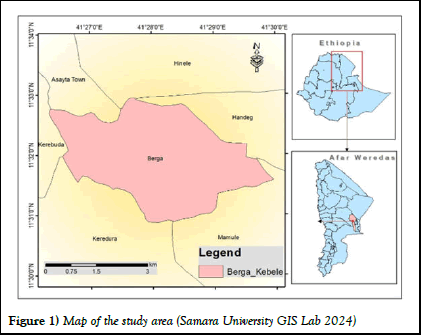
Figure 1) Map of the study area (Samara University GIS Lab 2024)
Study area and participants
Field experiment was done on maize grown agro pastoralist under the irrigation farm at the Aysayita Woredas in the Afar Regional Administration. Sample of four model agro-pastorals who grow maize and willing to participate in the study were selected. A training program were developed for the farmers on how to extract and apply neem extracts on their crops for controlling from insect pest. The training program was tailored to the specific needs and practices of the farmers and that was taken into account their mother language and cultural differences.
The trial plots were set up in the study area where the effectiveness of neem extracts on FAW in maize production could be tested. The trial plots were the representative of the farming practices in the area and that they were properly labeled and documented. The study aimed to determine the appropriate dose of the neem extracts to manage the FAW larvae and reduce the damage of maize leaves. The maize variety Melkasa 2 was planted on 7 Jan and 20 April 2023. The seed was sown from row to row and plant to plant with a spacing of 70 × 30 cm in a plot size of 6 m × 3.5 which was 21 m2 for each treatment and replicated four times. All the crop-raising practices including cultural practices, fertilization and weed management were followed to maintain healthy crops and no synthetic insecticides other than neem extracts included in the trial were applied.
Neem leaves were collected from the area around the agro-pastoral farm field. In addition, the neem seeds were collected in 2022 during the neem tree seed producing season at the area around academic staff residents at Samara University and were stored for the study purposes.
Neem extract preparation and application methods
The fresh neem leaves were collected from equally aged three neem trees. About 600 grams of fresh leaves were washed with water to avoid contamination, then choked and soaked with three litters of water to extract the required material from the leaf. After three days the extract was filtered using fine mesh and 20 grams of non-detergent soap was added to keep the extract attached to the plant leaf during application. Finally, from three liters of extracts the 1st litter was mixed with 20 liters of water, the 2nd litter was mixed with 25 liters of water and 3rd litter was mixed with 30 liters of water for application. The extracts of neem leaf were formulated with the required amount of water and were applied within eight hours after formulation. The extracts were applied using a nap sack and application were done early morning or late afternoon.
Collect matured neem seed and dry the seed in the shade for about two weeks, because the area was arid. At the end of the first week were shacked the seeds to remove the seeds cover and dry it in shade for a week then was made a powder using mortar made from metals. Then, 600 grams of seed kernel powder was soaked in 1 liter water for 12 hrs. Finally, 164 mill liters of neem seed oil were extracted using a new or net cloth, through hand pressing method. Therefore, formulations were made with mixing the 1st 80 mill liters extract of neem seed oil with 20 liters of water, the 2nd with 25 liters of water and the 3rd with 30 liters of water. Finally, a small amount of noon detergent liquid soap were mixed to the neem extracts. This helps in emulsifying the oil, making it easier to mix with water and adhere to plant surfaces. A few drops of liquid soap per liter of neem extract should be sufficient. The extracts of neem seed oil that were formulated with the required amount of water were applied within three hours after formulation.
Application of the first spray of the extracts was done 15 days after sowing as foliar application except for the control, whereas, from the second until the end of the experiment spray of the extracts was done at every 10-day intervals.
Extract toxicity bioassay: Two neem-based treatments were employed in this study: An aqueous extract of neem leaves and an aqueous extract of neem seed oil as aforementioned methods of extraction. Each treatment was assessed at three different concentrations 4.76%, 3.85% and 3.23% for the neem leaf extract and 0.3984%, 0.3189% and 0.2657% for the neem seed oil extract. Additionally, a control treatment was included, with four replications for each concentration.
Sampling and data collection methods
A systematic sampling method was used to take a random sample of plants from each treatments of the plot. During the study twenty maize plants with equal age and size were selected and replicated four times for the application of extracts and without application. Therefore, the total population was 336 maize plants in a randomized block designed and implemented.
Data collection was done 1 day before application and at 3, 6 and 9 days after each spraying date of the trial to evaluate the level of larva infestation and damaging level on the randomly selected 3 sampled plants from each experimental unit; the plants in the border rows were excluded. Therefore, larvae counting and recording were made by counting the number of larvae on each sample plant. This was done in the early morning or in the late afternoon since the fall armyworm “is usually most active in the morning or late afternoon.
Whereas, the level of damage caused by the fall armyworm on the sample maize plants in each treatment using a scale of 0 to 4 where: 0: no visible damage, 1: mild damage (less than 25% of leaves affected), 2: moderate damage (25%-50% of leaves affected), 3: severe damage (51%-75% of leaves affected), 4: very severe damage (more than 75% of leaves affected).
Statistical analysis
Once the larvae counting and damage evaluation are complete, use statistical analysis to compare the results of the different treatments to determine the most effective concentration of neem extract for controlling fall armyworms in maize were analyze using SPSS version 25.
Treatment-wise, damaging level was recorded and was pooled and expressed in scale. The data collected was subjected to statistical analysis as randomized complete block design after suitable transformations.
Mean separation of the number of larvae and damaging level per maize plant of treatments was performed using Least Significant Deference (LSD) test (P ≤ 0.05). The General Linear Model (GLM) was employed to assess the optimal time point to achieving the lowest larval count following the application of neem-based products. The analysis focused on the third day, sixth day and tenth day of the data collection intervals.
Determination of the effective concentrations of the extracts
The study was conducted in agro-pastoralist farm fields, with close collaboration with farmers who willingly participated. Notably, the data collected for this research did not include the farming practices carried out within the farmers' own fields. Instead, it was gathered from trial plots selected to represent typical farming practices in the area. These trial plots were appropriately labeled and documented. The primary objectives of the study were to determine the method of neem extract application and the effective concentration to control specific insect pests affecting crops in the study area. Maize (Zea mays L. Melkasa-2m) was one of the selected crops, with the fall armyworm (Spodoptera frugiperda J.E. Smith) identified as the prevalent insect pest during the study. Six different concentrations, along with a control, were tested to determine the concentration that resulted in the least infestation of fall armyworm larvae and caused the least damage to the crops. Therefore, the lowest mean larva number of FAW per maize was in neem seed oil extract at 0.3984% concentration (1.2632). The next best treatment was neem seed oil at 0.3189% (1.4211), followed by neem seed oil extract at 0.2657% concentrations (1.6140) and neem leaves water extraction at 4.76% (1.7719), neem leaves water extraction at 3.85% concentrations (2.0702), neem leaves water extraction at 3.23% concentrations (2.2632), while the highest mean larvae per plant was from control treatments (2.9298) (Figure 2). Likewise, the lowest mean damage of FAW larvae per maize was 0.3860 recorded from neem seed oil extract with 0.3984% concentration and followed by neem seed oil at 0.3189% concentrations (0.4386) and 0.2657% concentrations (0.5614) and from neem leaves water extraction at 4.76% (0.5965), 3.85% (0.7018) and 3.23% concentrations (0.9298), while the highest mean damage of FAW per maize plant was 1.2982 had obtained from control treatment’s (Figure 3), from the mean damaging level per maize plant were below 25% in all neem based product treatments indicate that there were no damaging results were observed during the study. However, mean damaging level of FAW larva per maize plant recorded from control was greater than one indicate that there were mild damaging results were observed during the study (Figure 3).
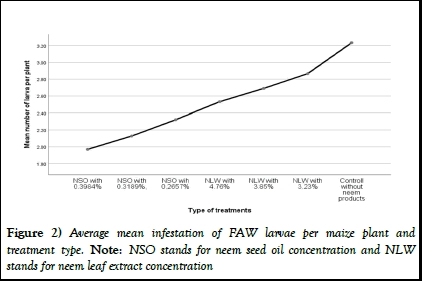
Figure 2) Average mean infestation of FAW larvae per maize plant and treatment type. Note: NSO stands for neem seed oil concentration and NLW stands for neem leaf extract concentration
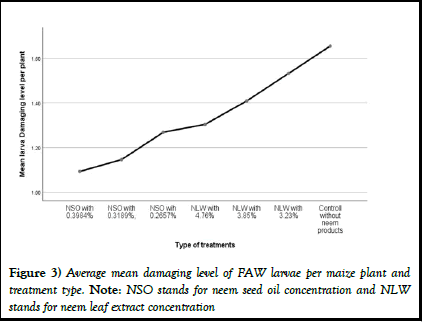
Figure 3) Average mean damaging level of FAW larvae per maize plant and treatment type. Note: NSO stands for neem seed oil concentration and NLW stands for neem leaf extract concentration
In addition, one-way ANOVA was tested to determine the mean significant difference among the treatments. Therefore, FAW larval infestation mean per maize plant were significantly difference with in the group at (P<0.05). Similarly, larva damage mean per maize plant were significantly difference with in the group at (P<0.05). Furthermore, all neem product treatments their mean score of larva infestation and larval damaging level per maize plant were significantly different at (P<0.05) from the control LSD test (Table 1). However, mean score of larva infestation per maize plant of NSO with 0.3984% concentration were significantly different at (P<0.05) from all treatments of NLW% concentration. But, mean score of FAW larval infestation per maize plants were not significantly differences among NSO with 0.398%, 0.319% and 0.266% concentrations treatments at (P>0.05) and also larval damage level means per maize plants were not significantly difference at P>0.05 among 0.398%, 0.319% and 0.266% concentrations of NSO and 4.76%, concentration NLW treatments LSD test (Table 1).
| Treatments | Larvae ± SE | Damaging score ± SE |
| NOS with 0.3984% | 1.2632 ± 0.12141a | 0.3860 ± 0.06505a |
| NOS with 0.3189% | 1.4211 ± 0.12249ab | 0.4386 ± 0.06631a |
| NOS with 0.2657% | 1.6140 ± 0.15583abc | 0.5614 ± 0.07517ab |
| NLW with 4.76% | 1.7719 ± 0.17703bc | 0.5965 ± 0.07018a |
| NLW with 3.85% | 2.0702 ± 0.18708cd | 0.7018 ± 0.07902bc |
| NLW with 3.23% | 2.2632 ± 0.18652d | 0.9298 ± 0.09969c |
| Control | 2.9298 ± 0.23329e | 1.2982 ± 0.11731d |
| Note: Means followed by the same later (s) in a column of each treatments are not significant different at =0.05 Least Significant Difference (LSD test). NOS stands for neem seed oil concentration and NLW stands for neem leaf extract concentration NOS stands for neem seed oil concentration and NLW stands for neem leaf extract concentration |
||
TABLE 1 Average number of FAW larvae and damaging level (SE) per maize plant among treatments
In the study the time intervals at which the least numbers of larval infestation were tried to analyze using general linear model of repeated measurement. The least mean numbers of FAW larvae per maize plant were observed in each treatment at the ninth days (Figure 5). However, there were no significant differences of means number of the FAW larvae infestation per maize plant were not observed among treatments and duration intervals (P>0.05) (Figure 4).
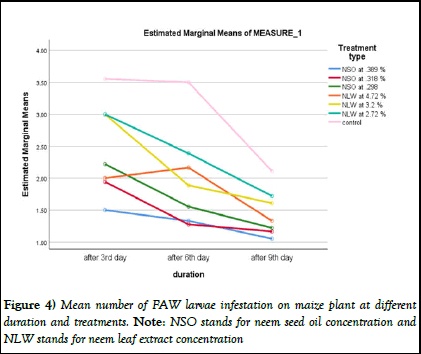
Figure 4) Mean number of FAW larvae infestation on maize plant at different duration and treatments. Note: NSO stands for neem seed oil concentration and NLW stands for neem leaf extract concentration
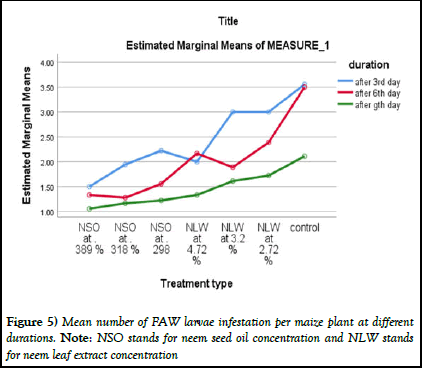
Figure 5) Mean number of FAW larvae infestation per maize plant at different durations. Note: NSO stands for neem seed oil concentration and NLW stands for neem leaf extract concentration
Numerous publications have emphasized the use of botanical pesticides for managing insect pests, displaying a skewed interest in this area. Botanical insecticides consist of multiple insecticidal ingredients with unique modes of action, making it challenging for pests to develop resistance. These pesticides possess several desirable characteristics, including strong selectivity, low toxicity to humans, livestock and natural enemies, as well as relatively low development and usage costs. Among the various botanical extracts studied worldwide, neem tree extract has a long-standing history of effectively controlling insect pests, pathogens and nematodes.
This research project aims to determine the efficacy of neem seed oil aqua extraction and neem leaf aqua extraction, at different concentrations, for controlling Fall Armyworm (Spodoptera armiger) on maize crops. All the concertation of the neem leaf and seed aqua extracts that were treated as treatments in field trial plots of maize plantation show significant differences of mean number of the FAW larvae infestation per maize plant over the control plot at P<0.05. Therefore, neem based products were shown the better potential over the control treatment in management of fall armyworm on maize crop. Similarly, conclude in their study that both neem seeds and leaf extracts have great potential as a natural insecticide for the management of fall armyworms on the maize plants. However, neem seed aqua extract at concentration 0.3984% were recorded the least infestation and damage level (1.2632) and (0.3860) respectively, while the largest infestation and damage were recorded in control treatment (2.929) and (1.2982) respectively. Similarly, different outers like: Approve the toxic substance of the neem tree the highest concentration in the seeds it contains various toxic substances that are effective. Therefore, neem seed oil aqua at 0.3984% concentration is the most effective over the rest seed oil extracts and leaf extracts. However, neem seed production is seasonal in the study area the production of maize does not coincide with the neem seed production. To implement the neem seed oil qua extract as a control agent farmer should collect seed from May-August and should be preserved in dry place with airyated material. On the other hand neem leaf accessible throughout the year neem leaf aqua extract at 4.76% concentration was the most effective to manage FAW larvae infestation over the concentrations of the rest of neem leaf aqua extracts treated in this trial.
Generally, the study was conducted at agro-pastoralist farm fields, collaborating closely with farmers who expressed a willingness to participate. The research findings will be simplified and disseminated to farmers to facilitate local-level implementation.
Overall, the neem based extracts in this project had the potential effect to reduce the FAW larvae population significantly and the incidences. Therefore, extracting and application of neem based products to recommend concentration will be accessible, cost-effective, environmentally sound and easy to produce locally alternative control methods.
Dissemination the result will help to promote the use of neem extracts as a sustainable and effective pest control measure. The neem seed and leaf aqua extracts act as potent natural insecticides, to manage FAW larvae population on maize plantation. Unlike synthetic chemical alternatives, neem extracts do not pose health risks to humans, animals or the environment, making them a preferred choice for sustainable farming and community wellbeing. Local villagers can easily adopt this technology, harnessing the power of neem to protect their crops, gardens and homes, while promoting a healthier and greener ecosystem.
As a recommendation, it would be beneficial to involve mechanical engineers and entomologists to enhance the efficiency of neem seed oil extraction instead of relying solely on cloth pressing. By developing a simple machine that can be manually operated, the extraction process can be streamlined and made more effective. This technology would greatly support agro-pastoralists and local villagers in their neem-based activities. The involvement of mechanical engineers would ensure that the machine is designed to optimize the extraction process, taking into account factors such as pressure, temperature and extraction time. Meanwhile, entomologists can provide valuable insights into the properties of neem seeds and guide engineers in developing an efficient extraction method. By combining their expertise, mechanical engineers and entomologists can create a user-friendly machine that improves the yield, quality and shelf time of neem seed oil, empowering agro-pastoralists and promoting the sustainable utilization of neem resources in local communities.
We would like to express our heartfelt acknowledgment to Samara University for providing the necessary funding that allowed us to complete our research project. Their support was instrumental in ensuring the smooth progress of the study and the attainment of meaningful results. Additionally, we are immensely grateful to the Aysayita Agro-Pastoral, Livestock and Natural Resource Conservation Office, as well as the Horticulture Department, particularly Mr. Ahimmed Mohamed and Mr. Nuru Yirga. Their guidance and assistance throughout the project were invaluable. They not only assigned experienced agro-pastoralists to work alongside us, but also provided essential resources such as farm fields, training facilities and support for data collection. We are truly indebted to them for their unwavering dedication and contribution, which played a significant role in the successful finalization of this research endeavor. Their commitment to fostering agricultural and natural resource conservation practices will forever to be etched in our memory.
[Crossref] [Google Scholar] [PubMed]