An International Journal
Agricultural and Biological Research
ISSN - 0970-1907
RNI # 24/103/2012-R1
RNI # 24/103/2012-R1
Research Article - (2026) Volume 42, Issue 1
This study aimed to evaluate the effectiveness of Entomopathogenic Fungi (EPF), particularly Metarhizium anisopliae and Beauveria bassiana, in managing FAW population in the Zamboanga peninsula. The study consisted of surveys on the socio-economic profile, knowledge, practices, and perceptions of corn farmers receiving EPF from the Regional Crop Protection Center (RCPC). The findings revealed that despite challenges such as limited education, low income, and small landholdings, farmers showed a high level of knowledge and practice regarding EPF, farmers showed 100% adoption of EPF. Most of the EPF beneficiaries (77.38%) prefer M. anisopliae, while 22.62% prefer B. bassiana as biocon against FAW. For the assessment of FAW mortality rate in corn field applied with EPF from RCPC, results showed a reduction in FAW populations in both B. bassiana and M. anisopliae treated fields compared to the cornfield without EPF. With a noticeable decrease in pest populations based on morphological characterizations, isolated EPF identified as M. anisopliae caused mortality of 25% compared to B. bassiana with 20%. Pathogenicity test of the isolated EPF yielded positive results and the M. anisopliae had the highest mortality (80%), followed by B. bassiana (70%) and Nomuraea sp. (60%). The study also observed fungi with limited growth in Cladosporium sp. and Aspergillus sp. exhibit limited potential in FAW control. The study recommends further research to assess the long-term effectiveness and sustainability of M. anisopliae, B. bassiana, and Nomuraea sp. in real-field conditions, considering factors like soil health, pest resistance, and seasonal variation.
Aspergillus sp.; Beauveria bassiana; Cladosporium sp.; Corn; Entomopathogenic Fungus (EPF); FAW; Metarhizium anisopliae; Nomuraea sp.
In the Philippines, corn or maize (Zea mays L.) is the main staple crop next to rice of Filipino households and a crucial crop for the growth of livestock, manufacturing industries for human consumption, animal feeds, and industrial uses. Corn serves as a raw resource for value-added and industrial goods. Maize is grown over the largest area and in the highest quantity in the upland regions of Mindanao, but the Zamboanga peninsula ranked lowest in terms of corn production in the country [1-3].
Corn production confronts several obstacles despite its significance, especially from insect pest infestations like the Fall Armyworm (FAW) (Spodoptera frugiperda Lin). The corn sector has suffered significant financial losses because of this invasive pest, endangering both farmer livelihoods and food security. FAW is becoming a threat in corn industry with remarkable dispersal capacity. The insect pest is now causing serious yield losses and is estimated to reduce up to 20% the of the annual loss to the corn industry in the country [4,5].
The FAW can be controlled with the combination of crop protection biocontrol agents, chemicals, and timely Integrated Pest Management (IPM) techniques [6]. There are recommendations for the use of chemical pesticides to protect crops from these pests, but their use has many disadvantages. The widespread application of chemical insecticides has led to widespread insect-pest pesticide resistance and negative effects on beneficial insects, wildlife, and human health. The use of bio-pesticides has a lasting effect and beneficial to human, animals and environment [7]. Biological control with the use of EPF is a promising strategy against insect pests. Entomopathogenic microbes like Entomopathogenic Fungi (EPF) and Nuclear Polyhedrosis Virus (NPV) have the capacity to infect and kill arthropods. Although they are typically isolated from arthropod remains, their natural habitat is soil [8].
The Regional Crop Protection Center (RCPC) in the Philippines plays a significant role in managing and mitigating pest-related issues, including the use of EPF like biological fungi (e.g., B. bassiana and M. anisopliae) for pest management. The mass production of these EPF is a key strategy in combating pest outbreaks, such as those caused by the fall armyworm and other agricultural pests. In Region 9, the implementation of biological fungi in the field involves applying the fungal spores directly to crops or areas with known pest infestations and distributed to the local corn growers per planting season. These fungi act as natural predators to pests, offering an eco-friendly alternative to chemical pesticides.
Thus, the researcher opted to propose this study to assess or evaluate biological-based management of corn fall army work using EPF in Zamboanga peninsula specifically the use of B. bassiana and M. anisopliae in corn production systems among corn growers in selected municipalities of Zamboanga peninsula, Philippines. Also to collect FAW in corn areas applied with EPF distributed by RCPC. Infection will be observed among collected FAW and isolation of pathogen will be done to confirm infections. Isolated pathogen will be further tested in the laboratory virulence and identification.
Objectives of the study
This study was conducted to determine the agronomical practices, perceptions and adoption rates of farmers to biological control, and identification of collected EPF of FAW in Zamboanga peninsula.
Specifically, this study aimed to:
In this study, the Zamboanga peninsula was the center of research encompassing the provinces of Zamboanga del Sur, Zamboanga del Norte and Zamboanga Sibugay. The selection of the corn area was based on the farm profile taken from the Regional Crop Protection Center (RCPC) Department of Agriculture, Sudlon, Molave. Zamboanga del Sur, Region IX. The owner of the cornfields must be a recipient of EPF mass produced by RCPC. The collection samples were based on farmer respondents that recently applied EPF. The farmer respondents have a minimum of one hectare of corn fields. Farmers planting Bt corn varieties and cornfields where the neighboring areas who applied synthetic chemicals are not included in the study.
The study involved farmer beneficiaries and recipients of the EPF, B. bassiana and M. anisopliae distributed by the Regional Crop Protection Center (RCPC) of Zamboanga peninsula. Based on purposive sampling, the researcher would randomly choose three municipalities each from Zamboanga del Sur, Zamboanga del Norte and Zamboanga Sibugay. Statistical software (Raosoft) was used to come up with the total of 84 farmer’s respondents with 5% margin of error and 5% confident level. Based on this random selection, the table below shows the municipalities, and population and the sample of the possible corn farmer participants of the study.
A structured, researcher-made questionnaire-checklist was used to collect qualitative data on the profile of the farmer-participants, their practices, knowledge, perceptions and adoption on the use of biological control against FAW. The qualitative design employed purposive surveys with the use of questionnaire which incorporates comprehensive data on agronomical practices, knowledge, perception and adoption of farmers on the use of biological control against FAW.
The quantitative phase involved rigorous experimentation to test the efficacy of these identified agents under controlled conditions, measuring their impact on FAW populations in laboratory trials to confirm findings from the qualitative insights. It is in this phase when the researcher was identifying the different and abundance of EPF as well as assessing the virulence of different EPF against FAW.
The qualitative research design was used along with the quantitative design. It was done using farmer respondents which reveal different perspectives and stimulate conversation around the biological control methods. The field level adoption rates and percentage distribution of EPF were also determined based on the responses of the farmer-participants.
Descriptive statistics were used to analyze the responses from the questionnaire. This included calculating the frequency and percentage of responses. Analysis of data was done through computer-aided statistical software programs. The Chi-square test of independence (X² test) was used for statistical method assessment farmers' knowledge, practices, and perceptions (independent variables) and the adoption rate of EPF (dependent variable). The consistently high Chi-square values and p-values less than 0.001. The data collected from the qualitative interviews were used to reinforce and triangulate the information obtained from the quantitative method [9-11].
The collection of FAW larvae was conducted in cornfields applied B. bassiana and M. anisoplae from Regional Crop Protection Center and from cornfields with no application of B. bassiana and M. anisoplae.
A typical FAW larvae scouting method was done by selecting a systematic movement pattern across the field to ensure comprehensive coverage. Following the zigzag or “W” pattern, the researcher started scouting and collecting healthy and cadaver FAW larvae in the corner of the field, moving diagonally across, and then reverses direction at regular intervals to form a series of connected zigzags [12-15].
Infested and mummified FAW larvae were taken from the total FAW sample collected from field. Larvae were placed in a clean vial and were brought to the laboratory for documentation, isolation, and processing.
Potato Sucrose Agar (PSA) media were prepared following the standard procedure using 20 g of agar, 18 g of potato, and 1000 ml SDW. Flat bottles were filled with 20 ml PDA medium and plugged with cotton. Sterilization was done in pressure cooker at 121°C at 15 psi for 20 minutes. PSA was allowed to congeal after sterilization under room temperature.
Potential E microbes were isolated from collected infested and mummified FAW larvae. The larvae surface was sterilized in 1% (v/v) NaOCl for one minute and rinsed twice in SDW. The mummified larvae were blot dried in sterile tissue paper and placed in Petri plates amended with PSA. After 3-5 days, mycelial growth from the infested and mummified larvae were transferred to PSA slants for purification and maintenance.
Seven-to-fourteen-day-old fungi previously isolated from mummified FAW larvae were used in assay. The conidial suspension of each isolate was standardized at 1 × 10 conidia per ml. After which, the suspension was sprayed uniformly in the side of the corn leaves and fed to FAW larvae.
FAW adults and larvae were collected on maize crops from the municipalities of Dumingag, Josefina, and Molave, Zamboanga del Sur, during Maize growing season. The collected adult FAWs were cultured in customized rearing cage where potted Maize was placed as a host. The collected FAW larvae were cultivated in a rearing box using young corn leaves as source of food. When the FAW larvae reaches the adult stage, they were collected and transferred to the rearing cage to established FAW eggs. The larvae were kept under laboratory conditions (28 ± 2°C, 65 ± 10% RH and with photoperiod of 12:12 h (L:D). Once oviposited, the egg batches were transferred to the rearing boxes with proper ventilation. After hatching, the neonatal larvae were fed with young corn leaves [16-18].
For identification of other fungal isolates, samples are collected from mummified infected FAW larvae. The samples are then transferred onto sterile Petri dishes containing Potato Dextrose Agar (PDA), The inoculated plates are incubated at a temperature of 25-30°C until sufficient fungal growth is visible. During this period, the colonies are examined for macroscopic features such as color, texture, shape, and growth patterns, which can provide initial clues about the fungal species.
Once visible growth is observed, a small sample of fungal mycelium or spores is collected and placed on a microscope slide covered with a slip for microscopic examination. The M. anisopliae produces green to yellow-green colonies with branched, smooth conidiophores and smooth, oval, yellowgreen conidia. In contrast, B. bassiana forms white to cream-colored colonies that turn off-white or light green, with unbranched or minimally branched conidiophores and smooth, ellipsoidal to ovoid, off-white or light green conidia. For Aspergillus sp., the key identifying feature is the presence of conidiophores with swollen vesicles and conidia arranged in chains, often with distinctive green, yellow, or black pigmentation. In contrast, Nomuraea sp. is identified by its branched, septate conidiophores, with conidia that are round or oval, clear to off-white, and typically borne in small clusters at the tips of the conidiophores. Cladosporium sp. are characterized by darkcolored, chain-like conidia and branching, septate conidiophores, along with well-developed, pigmented mycelium [19].
EPF isolates were tested for pathogenicity in FAW larvae. The experiments included six treatments. Treatment 1 was applied with B. bassiana, Treatment 2 with M. anisoplae, Treatment 3 with Aspergillus sp., Treatment 4 with Nomuraea sp., Treatment 5 with Cladosporium sp. and treatment 6 which is the control (no application of EPF). These treatments were replicated 5 times. Each replication was composed of ten FAW larvae which were placed in a plastic container.
Farmer respondents’ socio-demographic profile
Table 1 shows the socio-demographic profile of the farmer respondents.
Age: As indicated in the Table 1, majority of the farmer-respondents across the three provinces were middle-aged, aging 41-50 years old. This implies that farming is primarily managed by experienced individuals. However, it is worth noting that there has been an absence of farmers aged 20-30 years old across the three provinces. This could mean a lack of youth involvement in farming which poses a risk to the sustainability of agriculture in the region [20].
Sex: The data shows a clear predominance of male farmers in the province of Zamboanga del Sur, Zamboanga del Norte, and Zamboanga Sibugay making up 93.55%, 96.30%, and 92.31%, respectively. This indicates that farming is still a male-dominated profession.
Civil status: Most of the farmer-respondents in the three provinces are married (ZDS, 83.87%; ZDN, 92.59%; and ZS, 88.46%, respectively), indicating that farming is largely a family-oriented activity. This could also imply that individual’s resort to farming to provide food for their families.
Number of children: Most of the farmers across three provinces have 3–4 children. This indicates that farming families tend to have an average to big family size.
Educational attainment: A greater percentage of farmers in the three provinces obtained high school level education with 16 or 51.61% for ZDS; 12 or 44.44%, ZDN; and 13 or 50.00%, ZS. This indicates that farming in these provinces is primarily carried out by individuals with limited formal education.
Income per cropping: The income per cropping distribution of farmerrespondents across three provinces ranges from 20,000.00 to 25,001.00 to 25,000.00. This implies that the farmer-respondents can be categorized as poor to low-income earners based on the Family Income and Expenditure Survey (FIES) of the Philippine Statistics Authority (PSA) published in 2024. This finding reinforces the longstanding reality that corn farmers in the region belong to a poverty-stricken group, highlighting the urgent need for targeted economic support and livelihood interventions to improve their well-being [21-23].
Number of years in farming: The farming experience of farmer-respondents in the provinces of Zamboanga del Sur, Zamboanga del Norte, and Zamboanga Sibugay ranges from 16-20 years. This indicates that a large proportion of farmers have substantial experience in farming, which could likely contribute to their expertise and knowledge of agricultural practices.
Total land area tilled: Majority of the farmer-respondents cultivate 1-2 hectares of land area across the three provinces (ZDS-83.87%; ZDN-88.89%; and ZS-88.46%, respectively). This reflects the dominance of small-scale farming in the involved provinces [24,25].
Land ownership: The land ownership distribution among farmerrespondents in Zamboanga del Sur (21 or 67.74%), Zamboanga del Norte (19 or 70.37%), and Zamboanga Sibugay (17 or 65.38%) indicates that majority of them are tenants. This finding implies the continued prevalence of land tenancy in the Philippines.
Source of capital: Majority of the farmer-respondents rely on borrowed capital (ZDS-67.74%; ZDN-70.37%; and ZS-69.23%, respectively). This signifies that farmers continue to depend on external financial sources, which notably limits their income and access to financial independence.
Corn variety planted: The corn variety planted distribution among farmers across three provinces of Zamboanga peninsula shows that traditional corn varieties (Tinigib) are mostly planted particularly in Zamboanga del Norte (25 or 92.59%) and Zamboanga Sibugay (24 or 92.31%), respectively. Meanwhile, sweet corn is more popular in Zamboanga del Sur, with majority of farmers (18 or 58.06%) planting this variety. This implies that the farmer-respondents in the provinces of Zamboanga del Norte and Zamboanga Sibugay prefer local, staple corn variety while Zamboanga del Sur farmers have inclination toward market-oriented varieties.
| Profile | Zamboanga del Sur (ZDS) | Zamboanga del Norte (ZDN) | Zamboanga Sibugay (ZS) | |||
| F | % | F | % | F | % | |
| Age (years) | ||||||
| 20-30 | - | - | - | - | - | - |
| 31-40 | 3 | 9.68 | 3 | 11.11 | 2 | 7.69 |
| 41-50 | 23 | 74.19 | 17 | 62.96 | 15 | 57.69 |
| 51-60 | 5 | 16.13 | 7 | 25.93 | 9 | 34.62 |
| 61 and above | - | - | - | - | - | - |
| Sex | ||||||
| Male | 29 | 93.55 | 26 | 96.3 | 24 | 92.31 |
| Female | 2 | 6.45 | 1 | 3.7 | 2 | 7.69 |
| Civil status | ||||||
| Married | 26 | 83.87 | 25 | 92.59 | 23 | 88.46 |
| Single | - | - | - | - | - | - |
| Separated | 1 | 3.23 | 1 | 3.7 | 2 | 7.69 |
| Widow/er | 4 | 12.9 | 1 | 3.7 | 1 | 3.85 |
| No. of children | ||||||
| 0 | - | - | - | - | - | - |
| 1 | 2 | 6.45 | 3 | 11.11 | - | - |
| 2 | 8 | 25.61 | 6 | 22.22 | 6 | 23.08 |
| 3 | 11 | 35.48 | 13 | 48.15 | 14 | 53.85 |
| 4 | 10 | 32.26 | 5 | 18.52 | 6 | 23.08 |
| Educational level | ||||||
| Elementary level | 9.68 | 3 | 11.11 | 3 | 11.54 | |
| Elementary graduate | 6.45 | 2 | 7.41 | 2 | 7.69 | |
| High school level | 51.61 | 12 | 44.44 | 13 | 50 | |
| High school graduate | 25.81 | 8 | 29.63 | 6 | 23.08 | |
| College level | 6.45 | 2 | 7.41 | 1 | 3.85 | |
| College graduate | - | - | - | 1 | 3.85 | |
| Income per cropping (±) | ||||||
| 10,000 and below | - | - | - | - | - | |
| 10,001 to 15,000 | 3.23 | - | - | 1 | 3.85 | |
| 15,001 to 20,000 | 22.58 | 6 | 22.22 | 4 | 15.38 | |
| 20,001 to 25,000 | 41.94 | 11 | 40.74 | 11 | 42.31 | |
| 25,001 to 35,000 | 32.26 | 10 | 37.04 | 10 | 38.46 | |
| 35,001 and above | - | - | - | 1 | 3.85 | |
| No. of years in farming | ||||||
| 6 to 10 | 9.68 | 1 | 3.7 | 1 | 3.85 | |
| 11 to 15 | 25.81 | 6 | 22.22 | 14 | 53.85 | |
| 16 to 20 | 38.71 | 12 | 44.44 | 6 | 23.08 | |
| 21 to 25 | 22.58 | 7 | 25.93 | 4 | 15.38 | |
| 26 to 30 | 3.23 | 1 | 3.7 | 1 | 3.85 | |
| 31 years and above | - | - | - | - | - | |
| Land area tilled | ||||||
| 1 ha to 2 ha | 83.87 | 24 | 88.89 | 23 | 88.46 | |
| 3 ha to 4 ha | 16.13 | 3 | 11.11 | 3 | 11.54 | |
| 5 ha and above | - | - | - | - | - | |
| Land ownership | ||||||
| Owned | 12.9 | 3 | 11.11 | 3 | 11.54 | |
| Rented | 19.35 | 5 | 18.52 | 6 | 23.08 | |
| Tenant | 67.74 | 19 | 70.37 | 17 | 65.38 | |
| Source of capital | ||||||
| Owned | 32.26 | 8 | 29.63 | 8 | 30.77 | |
| Borrowed | 67.74 | 19 | 70.37 | 18 | 69.23 | |
| Corn variety planted | ||||||
| Tinigib/Traditional | 12.9 | 25 | 92.59 | 24 | 92.31 | |
| Sweet corn | 58.06 | 2 | 7.41 | 2 | 7.69 | |
| Hybrid (non-Bt corn) | 29.03 | - | - | - | - | |
TABLE 1 Distribution of the socio-demographic profile of farmer-respondents in the three provinces of region IX
Farmers’ knowledge, practices, perceptions and adoption on use of EPF released by RCPC
The farmer’s knowledge, practices, and perception on use of EPF released by RCPC demonstrated a very high level of knowledge on the use of EPF, particularly M. anisopliae and B. bassiana. With an overall mean score of 4.83, all statements under this domain were rated as "Very high," indicating that the respondents are not only aware of these EPF but also confident in their application and committed to continuous learning. Particularly, statements on awareness of EPFs and learning from RCPC-led training both scored a perfect 5.00, reflecting the strong influence of RCPC’s training and workshops in enhancing farmer knowledge. Respondents also expressed confidence in using these agents (mean=4.89) and reported regular attendance in related training sessions (mean=4.65). These findings affirm the role of targeted extension services in building farmer capacity. As emphasized by van den Berg and Jiggins, participatory and field-based training significantly enhances farmers’ knowledge and competence in biological pest control. Pretty et al., similarly note that the successful adoption of ecological approaches is knowledgeintensive and relies on sustained training and institutional support. Furthermore, the FAO, underscores that awareness and education are critical factors in the widespread use of biocontrol agents. The data clearly indicate that RCPC's initiatives have been effective in promoting the use of EPFs as part of integrated pest management strategies, eventually contributing to more sustainable and environmentally sound farming practices (Table 2).
| Statements | M | Interpretation |
| I am aware of the EPF, such as M. anisopliae and B. Bassiana | 5 | VH |
| I learned about EPF primarily through training and workshops provided by RCPC | 5 | VH |
| I believe that using EPF like M. anisopliae and B. bassiana has improved my farming practices | 4.96 | VH |
| I feel confident in applying EPF to manage pests in my corn crops | 4.96 | VH |
| I regularly attend training or seminars conducted by RCPC to enhance my knowledge and application of EPF for pest management | 4.97 | VH |
| Overall mean | 4.98 | VH |
TABLE 2 Farmer-respondents’ level of knowledge on the use of EPF
Farmer-respondents level of practices on the use of EPF
The farmer-respondents level of practices on the use of EPF showed a very high level of practice in the use of EPF, specifically M. anisopliae and B. bassiana (Table 3). With an overall mean score of 4.98, all five practice indicators were rated as "Very high," reflecting the consistent and effective integration of EPF into the respondents' pest management routines. The maximum mean score of 5.00 was observed in three key areas: Regular use of EPF every cropping season, sourcing of EPF from the RCPC-DA, and reduced reliance on chemical pesticides due to EPF application. These results recommend that not only are the farmers knowledgeable, but they are also translating that knowledge into sustainable and environmentally friendly agricultural practices. The practice of applying EPF during the early whorl stage (mean=4.90) further demonstrates a technical understanding of timing and pest lifecycle, enhancing the efficacy of EPF use. The high preference for EPF in managing FAW and other lepidopterous pests (mean=4.99) also shows a shift in farmer behavior toward safer pest control alternatives.
These practices are well-supported by scholarly and institutional authorities. According to FAO, the integration of EPF into routine farming practices is a cornerstone of sustainable pest management and is most effective when supported by strong extension services. Schreinemachers et al., note that repeated exposure to training and easy access to inputs are essential for the successful adoption of non-chemical alternatives in farming. The consistent sourcing of EPF from RCPC-DA aligns with this, indicating that institutional support is readily available. van Lenteren, further emphasizes that successful biological control adoption depends on proper timing, application techniques, and farmer commitment, all of which are evident in the responses of the farmers in this study. The very high level of practice demonstrated by the respondents affirms the RCPC's role in facilitating the widespread adoption of EPF and underlines the viability of biological control as a mainstream pest management strategy in corn farming.
| Statements | M | I |
| I use M. anisopliae and B. bassiana every cropping season | 5 | VH |
| I prefer using EPF to control FAW and other lepidopterous pests in my corn fields | 4.99 | VH |
| I apply EPF at the early whorl stage of my corn crop to effectively manage pests | 4.99 | VH |
| I usually get my supply of EPF from RCPC-DA for pest management in my corn fields | 5 | VH |
| The use of EPF in my farming practices has helped reduce the need for chemical pesticides | 5 | VH |
| Overall mean | 4.99 | VH |
TABLE 3 The farmer-respondents level of practices on the use of EPF
Farmer-respondents level of perceptions on the use of EPF
The farmer-respondents level of perceptions on the use of EPF demonstrated a very high level of positive perception toward the use of EPF in pest management (Table 4). With an overall mean score of 4.92, the responses indicate strong agreement with the benefits of EPF, particularly in terms of effectiveness, environmental safety, cost-efficiency, and sustainability. The highest mean of 5.00 were recorded in the belief that EPFs are environmentally friendly and cost-effective for controlling FAW and other lepidopterous pests. Additionally, farmers affirmed that EPFs contribute to improved crop yields (mean=4.83) and offer a sustainable alternative to chemical pesticides (mean=4.89). These perceptions reflect a growing trust in biological control methods as reliable, safe, and economically viable solutions for pest management.
This aligns with the findings of Pretty et al., who emphasized that farmers' positive perceptions toward environmentally friendly practices play a crucial role in the successful adoption of sustainable agriculture. They noted that when farmers observe tangible benefits such as increased yields, reduced costs, and environmental protection, they are more likely to adopt and sustain these practices. In this case, the high perception scores suggest that the use of EPFs is not only scientifically effective but also practically appreciated by farmers, reinforcing their willingness to continue and promote their use in the future.
| Statements | M | I |
| I find the use of EPF very effective in managing pests in my corn fields | 4.89 | VH |
| The use of EPF has significantly increased crop yields | 4.83 | VH |
| I believe that EPF are environmentally friendly compared to chemical pesticides | 5 | VH |
| I believe that the use of EPF is a cost-effective method for control of Fall Armyworm (FAW) and other lepidopterous pests | 5 | VH |
| I find EPF a more sustainable solution to control Fall Armyworm (FAW) and other lepidopterous pests | 4.89 | VH |
| Overall mean | 4.92 | VH |
TABLE 4 The farmer-respondents level of perceptions on the use of EPF
Field adoption rates and percentage distribution of EPF from regional crop protection center
The farmer-respondents’ adoption rates of EPF results show a 100%, indicating strong acceptance of this biological pest control method (Table 5). A majority (77.38%) use M. anisopliae, while 22.62% use B. bassiana, reflecting a clear preference for the former. Most farmers (65.48%) have adopted EPF within the last 1–2 years, suggesting recent promotion or awareness campaigns. The main reasons for adoption include its effectiveness, cost-efficiency, and environmental safety, all cited by 100% of respondents. Additionally, 66.67% of farmers were influenced by recommendations from extension officers, while none were driven by policy mandates. These findings highlight a voluntary, well-supported, and sustainable shift toward biological pest control practices.
| Farmer’s adoption practices | F | % |
| Do you currently use EPF such as M. anisopliae or B. bassiana in your corn farming? | ||
| Yes | 84 | 100 |
| No | - | |
| EPF used in corn field | ||
| M. anisopliae | 65 | 77.38 |
| B. bassiana | 19 | 22.62 |
| How long do you apply EPF in your corn field? | ||
| 1-2 years | 55 | 65.48 |
| 3-4 years | 19 | 22.62 |
| 4-5 years | 10 | 11.9 |
| Why did you choose to adopt the use of EPF? | ||
| Effective in controlling pests | 84 | 100 |
| Safer for the environment | 84 | 100 |
| Recommended by extension officers (e.g., RCPC) | 56 | 66.67 |
| Cost-effective | 84 | 100 |
| Required or encouraged by local programs | 0 | - |
TABLE 5 Farmer-respondent’s adoption rate on EPF
Associated factors of farmer’s knowledge, practices and perception in adoption rate on the use of EPF
The associated factors of farmers’ knowledge, practices and perceptions in adoption rate on the use of EPF were presented in Table 6.
Knowledge of the farmer respondents
When it comes to the knowledge of the farmer respondents on their adoption of EPF use, the results show extremely high Chi-square values for all three variables knowledge that EPF can improve farming practices (X2=3349.51), manage pests in corn crops (X2=3177.43), and attendance at training and seminars (X2=3257.17) with all p-values being less than 0.001. These highly significant results indicate a strong association between each factor and the likelihood of EPF adoption. Specifically, farmers who are aware of the benefits of EPF and those who participate in educational activities are much more likely to adopt the technology. This suggests that improving awareness and providing training opportunities can greatly enhance the acceptance and use of EPF in farming communities. Similarly, t-study found that farmers’ knowledge of EPF and participation in training strongly influenced the adoption of EPF, with significant associations between awareness, educational activities, and increased usage. Both studies highlight the importance of farmer education and awareness in successfully adopting eco-friendly pest control technologies like EPF.
Practices of farmer respondents
When it comes to the practices of the farmer respondents on their adoption of EPF use, the results show very high Chi-square values: 3566.00 for the belief that EPF can control FAW and other pests, and 3562.00 for the view that EPF effectively control pests, with both having p-values less than 0.001. These findings indicate a strong and statistically significant relationship between farmers’ practical experiences and beliefs and their willingness to adopt EPF. In other words, farmers who observe or believe in the effectiveness of EPF in pest control are much more likely to use it in their fields. This emphasizes the importance of demonstrating EPF's effectiveness in practice to increase farmer adoption.
Similar study highlights the importance of farmer awareness and education for the adoption of EPF. Just as the effectiveness of these EPFs in controlling FAW depends on their proper use, your study shows that increasing knowledge and providing training can significantly enhance the adoption of EPF in farming communities. Both emphasize the role of education and awareness in improving pest control practices.
Perceptions of farmer respondents
When it comes to the perceptions of the farmer respondents on their adoption of EPF, the results reveal statistically significant associations, with high Chi-square values for all three perception variables: 1586.67 for the belief that EPF is very effective in managing pests, 1355.742 for the view that EPF increases crop yield, and 2487.51 for the perception that EPF offers a sustainable solution for FAW and other pests—all with p-values less than 0.001. These findings indicate that positive perceptions about the effectiveness, yield benefits, and sustainability of EPF strongly influence its adoption among farmers. Farmers who recognize these advantages are significantly more likely to use EPF as part of their pest management strategies. Thus, improving farmers' perceptions through education and demonstration can play a crucial role in increasing EPF adoption.
The findings from the study in Uganda, which highlighted farmers' recognition of Fall Armyworm (FAW) as a significant threat and their reliance on chemical controls, align with the results from your study on farmers' perceptions of EPF adoption. Both studies emphasize that awareness and perceptions play a critical role in pest management decisions. In Uganda, while farmers were aware of the FAW's impact, their choice of pest control methods was largely influenced by their limited knowledge of alternative solutions. The study shows that positive perceptions about EPF’s virulence, yield benefits, and sustainability are strongly associated with its adoption, as demonstrated by the statistically significant Chi-square values. This indicates that, just as educating farmers in Uganda could encourage a shift from chemical to more sustainable pest control methods, improving farmers' perceptions through education and demonstration is key to increasing the adoption of EPF and fostering more eco-friendly farming practices, Kalyebi et al.
| Responses | Chi-square (X2) | df | p-value |
| Knowledge | |||
| EPF can improve farming practices | 3349.51 | 1 | <0.001 |
| EPF can manage pests in corn crops | 3177.43 | 1 | <0.001 |
| Attend training and seminars | 3257.17 | 1 | <0.001 |
| Practices | |||
| EPF can control FAW and other pests | 3566 | 1 | <0.001 |
| EPF effectively manage pests | 3562 | 1 | <0.001 |
| Perception | |||
| EPF is very effective in managing pest | 1586.67 | 1 | <0.001 |
| EPF significantly increase crop yield | 1355.742 | 1 | <0.001 |
| EPF is a sustainable solution for FAW and other pest | 2487.51 | 1 | <0.001 |
TABLE 6 Association of farmer’s knowledge, practices and perception to adoption rate on the use of EPF
Assessment of FAW mortality rate in corn field applied with EPF from RCPC
The results from the study (Table 7) demonstrate the effectiveness of two EPF, M. anisopliae and B. bassiana, in controlling FAW larvae in corn fields across Zamboanga del Sur, Zamboanga del Norte, and Zamboanga Sibugay. For M. anisopliae, mortality rates showed a consistent increase from 10% at 7 Days after Planting (DAP) to 25% by 13 DAP in Zamboanga del Sur, from 9% to 24% in Zamboanga del Norte, and from 10% to 24% in Zamboanga Sibugay. These results indicate that M. anisopliae progressively reduces FAW populations over time, confirming its efficacy as a biological control agent for FAW. In comparison, B. bassiana exhibited slightly lower mortality rates, with an increase from 8% at 7 DAP to 17% at 13 DAP in Zamboanga del Sur, from 6% to 16% in Zamboanga del Norte, and from 7% to 20% in Zamboanga Sibugay. While slightly less effective than M. anisopliae, B. bassiana still demonstrated considerable potential for controlling FAW larvae. In contrast, the control groups, which received no EPF application, showed lower mortality rates, ranging from 2% to 3%, validating that the observed mortality in the treated groups was indeed due to the EPF applications. These findings highlight the effectiveness of M. anisopliae and B. bassiana as viable alternatives to chemical pesticides in managing FAW infestations in corn farming.
| Farm | Variety | Age of corn plant (days) | 7 DAA | 10 DAA | 13 DAA | |||
| Total FAW population | % FAW mortality | Total FAW population | % FAW mortality | Total FAW population | % FAW mortality | |||
| Areas applied with M. anisopliae | ||||||||
| Zamboanga del Sur | ||||||||
| Dumingag | Hybrid corn | 12 | 66 | 10 | 60 | 16 | 58 | 25 |
| Josefina | Sweet corn | 10 | 80 | 11 | 75 | 16 | 70 | 23 |
| Molave | Tinigib | 12 | 70 | 10 | 68 | 16 | 60 | 25 |
| Zamboanga del Norte | ||||||||
| Manukan | Tinigib | 14 | 88 | 9 | 80 | 15 | 70 | 23 |
| Polanco | Tinigib | 14 | 75 | 10 | 70 | 17 | 65 | 24 |
| Siayan | Sweet corn | 12 | 70 | 9 | 68 | 14 | 61 | 22 |
| Zamboanga Sibugay | ||||||||
| Buug | Tinigib | 13 | 80 | 10 | 78 | 16 | 71 | 20 |
| Naga | Tinigib | 14 | 75 | 11 | 75 | 16 | 65 | 22 |
| Ipil | Sweet corn | 13 | 76 | 11 | 72 | 18 | 68 | 24 |
| Areas applied with B. bassiana | ||||||||
| Zamboanga del Sur | ||||||||
| Dumingag | Hybrid corn | 12 | 88 | 8 | 75 | 13 | 65 | 17 |
| Josefina | Sweet corn | 12 | 79 | 7 | 70 | 11 | 60 | 15 |
| Molave | Tinigib | 13 | 75 | 6 | 68 | 9 | 61 | 15 |
| Zamboanga del Norte | ||||||||
| Manukan | Tinigib | 13 | 80 | 7 | 79 | 10 | 59 | 16 |
| Polanco | Tinigib | 13 | 85 | 6 | 75 | 10 | 69 | 16 |
| Siayan | Sweet corn | 14 | 81 | 7 | 69 | 10 | 61 | 18 |
| Zamboanga Sibugay | ||||||||
| Buug | Tinigib | 12 | 90 | 9 | 85 | 12 | 75 | 20 |
| Naga | Tinigib | 12 | 91 | 7 | 81 | 13 | 70 | 20 |
| Ipil | Sweet corn | 12 | 95 | 7 | 80 | 11 | 68 | 17 |
| Areas with no EPF application | ||||||||
| Dumingag, Zamboanga del Sur | Tinigib | 12 | 115 | 2 | 108 | 2 | 110 | 3 |
| Siayan, Zamboanga del Norte | Tinigib | 14 | 125 | 3 | 125 | 3 | 112 | 3 |
| Buug, Zamboanga Sibugay | Tinigib | 14 | 95 | 3 | 118 | 3 | 98 | 3 |
| Note: DAA: Days after Application; EPF: Entomopathogenic Fungus | ||||||||
TABLE 7 Assessment of FAW % mortality in corn fields applied with EPF from RCPC at 7, 10, and 13 days after application
Assessment of FAW % mortality applied with B. bassiana across three provinces of Zamboanga peninsula at 7, 10, and 13 days after application
The graph shows the percentage mortality of FAW on corn of different ages (10, 12, 13, and 14 days old) treated with M. anisopliae across three provinces in the Zamboanga peninsula, measured at 7, 10, and 13 days after application. Mortality increased over time in all age groups, confirming the gradual virulence of the EPF. At day 13, the highest mortality was observed in 12-day-old corn at 24%, followed closely by 10 and 14-day-old corn at 23%, while 13-day-old corn showed the lowest at 22%. Although initial mortality (at day 7) varied slightly, all age groups reached the same 16% by day 10, indicating a consistent mid-stage response. These results suggest that M. anisopliae is virulent across different corn growth stages, with slightly higher impact when applied to corn aged 10 to 12 days (Figure 1).
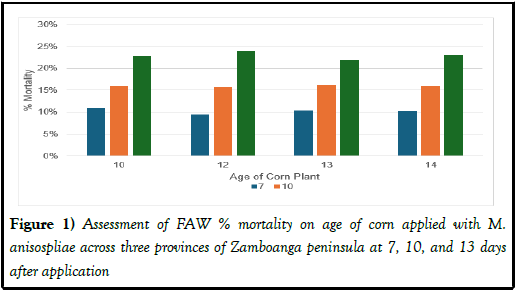
Figure 1) Assessment of FAW % mortality on age of corn applied with M. anisospliae across three provinces of Zamboanga peninsula at 7, 10, and 13 days after application
Assessment of FAW % mortality on age of corn applied with B. bassiana across three provinces of Zamboanga peninsula at 7, 10, and 13 days after application
Identification and pathogenicity of isolated EPF from FAW cadaver collected from Zamboanga peninsula: There were five isolates generated from the collected cadaver of FAW larvae from 18 farms in different corn field areas in three provinces of Zamboanga peninsula (Table 8).
| Isolated EPF code | Farm | Pathogen |
| DZD 01 | Dumingag, Zamboanga del Sur | M. anisolpliae |
| SZN 01 | Siayan, Zamboanga del Norte | B. bassiana |
| JZS 01 | Josefina Zamboanga del Sur | Aspergillus sp. |
| PZN 01 | Polanco, Zamboanga del Norte | Nomuraea sp. |
| MZS 01 | Molave, Zamboanga del Sur | Cladosporium sp. |
TABLE 8 Isolates from collected cadaver
Cultural and morphological characteristics of EPF
The cultural and morphological characteristics of M. anisopliae, B. bassiana, Aspergillus sp., Nomuraea sp., and Cladosporium sp. vary significantly, each exhibiting unique features that help in their identification and understanding of their ecological roles. M. anisopliae has a green obverse and a white to pale yellow reverse, with a round, velvety texture and moderately dense growth. Its colonies are fluffy, and it produces greenish conidia in clusters, supported by branched conidiophores. Aspergillus sp., on the other hand, display a fuzzy appearance and can be green, black, or yellow in color, with colonies that are dense and thick. These fungi also show zonation, with darker centers and lighter edges, and produce conidia in chains on branched, stalk-like conidiophores. Nomuraea sp. has a greenish obverse and a white to cream-colored reverse, with a velvety to cotton-like texture and a dense and thick growth due to abundant spore formation. Its conidia are globose and produced in branched patterns by branched conidiophores.
B. bassiana starts as white to cream-colored and turns slightly brownish as it matures. It grows with a velvety to fluffy texture, and the colonies are moderately dense, with fluffy conidiophores giving the fungus its characteristic appearance. Finally, Cladosporium sp. have a dark green, olivebrown, or black obverse, and a white to pale yellow reverse, with colonies that are fuzzy or grainy due to abundant conidia. Zonation is present, and conidia are produced in chains by short-stalked conidiophores. Each of these fungi exhibits distinct cultural traits that are important for their identification, ecological function, and potential use in biological control and industrial applications.
M. anisopliae typically exhibits a green obverse with a white to pale yellow reverse. The colony has a round shape and a velvety texture. It is fluffy and smooth in appearance with a moderately dense growth. The fungus does not show zonation, and its colonies generally range from 30 mm to 60 mm in diameter after 3 to 5 days of growth. The conidia, which are greenish in color, are produced in clusters that cover the surface of the colony, supported by branched conidiophores.
M. anisopliae (Figure 2) is a well-known EPF that infects insects by penetrating their cuticle, leading to systemic infection and eventual death. Studies have demonstrated its potential in reducing fall armyworm populations through direct infection and disruption of larval development. Research by Mubeen et al., highlights the dose-dependent effect of M. anisopliae on fall armyworm larvae, showing significant reductions in growth and survival rates. Additionally, Mohd et al., found that higher concentrations of M. anisopliae resulted in increased mortality rates, making it a viable eco-friendly option for integrated pest management. Aarthi et al., compared the efficacy of various biocontrol agents, confirming the effectiveness of M. anisopliae alongside other EPFs like Nomuraea sp. and B. bassiana.
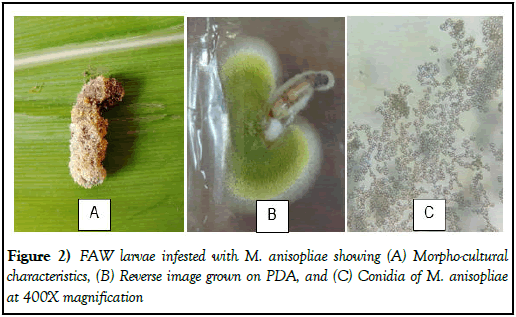
Figure 2) FAW larvae infested with M. anisopliae showing (A) Morpho-cultural characteristics, (B) Reverse image grown on PDA, and (C) Conidia of M. anisopliae at 400X magnification
EPF isolate description
B. bassiana (Figure 3) starts as white to cream-colored, turning brownish as it matures. It has a velvety to fluffy texture, with moderately dense growth. The fluffy appearance is due to the production of stalk-like conidiophores, and it is used for pest management as well.
Recent studies highlight the effectiveness of Beauveria bassiana in controlling fall armyworm populations. Research by Idrees et al., evaluated multiple isolates of B. bassiana, demonstrating high mortality rates in fall armyworm eggs and larvae. Additionally, Nonthakorn, et al., explored the role of B. bassiana as an endophytic fungus, showing its ability to persist in plant tissues and provide long-term pest protection.
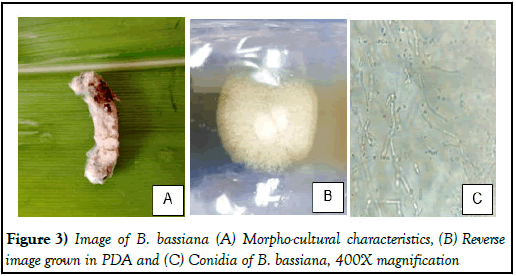
Figure 3) Image of B. bassiana (A) Morpho-cultural characteristics, (B) Reverse image grown in PDA and (C) Conidia of B. bassiana, 400X magnification
Aspergillus sp. (Figure 4) display a fuzzy appearance with colors ranging from green, black, or yellow, and the reverse is typically white, yellow, or brown. The colony is round and flat, with a velvety to fuzzy texture. Its growth is dense and can become thick. Zonation is present in this species, with the colony diameter ranging from 30 mm to 100 mm in optimal growth conditions. The conidia are produced in chains, supported by branched, tall, stalk-like conidiophores.
The pathogenicity assessment of Aspergillus species demonstrated significant insecticidal potential against FAW. It penetrates the larvae’s cuticle and disrupt physiological processes resulted in high mortality rates, suggesting a viable biocontrol strategy. Similarly, it exhibits promising effectiveness in controlling FAW populations, reinforcing their role in integrated pest management.
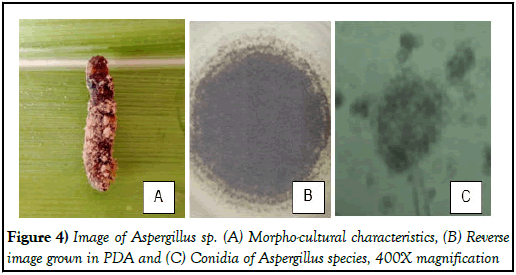
Figure 4) Image of Aspergillus sp. (A) Morpho-cultural characteristics, (B) Reverse image grown in PDA and (C) Conidia of Aspergillus species, 400X magnification
Nomuraea sp. (Figure 5) has a greenish obverse with a white to creamcolored reverse. The colony is round with a flat or slightly raised appearance and features a velvety to cotton-like texture. Its growth is dense and thick, primarily due to the spore formation. Zonation is absent, and the colony reaches a diameter of 30 mm to 50 mm in optimal conditions. The conidia are smooth and globose, often produced in a branched pattern supported by branched and stalk-like conidiophores.
The study of Monticalvo evaluates the virulence of M. rileyi isolates and their enzymatic activities, which contribute to insect mortality. It confirms the high pathogenicity of Metarhizium sp. (formerly Nomuraea sp.) against FAW. Laboratory trials demonstrated that M. rileyi involves fungal penetration through the insect cuticle, evading immune responses, and causing physiological disruptions that lead to death.
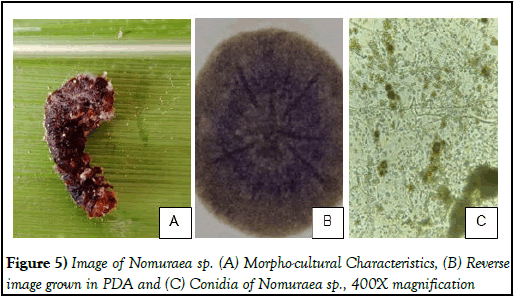
Figure 5) Image of Nomuraea sp. (A) Morpho-cultural Characteristics, (B) Reverse image grown in PDA and (C) Conidia of Nomuraea sp., 400X magnification
Cladosporium sp. (Figure 6) feature dark green, olive-brown, or black colors, with a white to pale yellow reverse. Its colonies are fuzzy and grainy due to abundant conidia. Zonation is present, and it produces dark-colored conidia in chains from short-stalked conidiophores.
Cladosporium sp. have been studied for their potential insecticidal activity against FAW. Research has shown that secondary metabolites extracted from Cladosporium sp. exhibit toxicity against third instar FAW larvae. A study found that the ethyl acetate extract of C. cladosporioides had an LC50 value of 229 ppm, making it one of the most effective fungal extracts tested. The mode of action involves disrupting larval enzyme activities, particularly Acetylcholinesterase (AchE) and Glutathione S-Transferase (GST), leading to physiological dysfunction and mortality. Additionally, histopathological analysis of infected larvae revealed severe damage to the cuticle layer, midgut membrane, and fatty bodies, further confirming the pathogenic effects of Cladosporium metabolites. These findings suggest that Cladosporium sp. could serve as natural biopesticides for controlling fall armyworm populations, offering an environmentally friendly alternative to chemical insecticides.
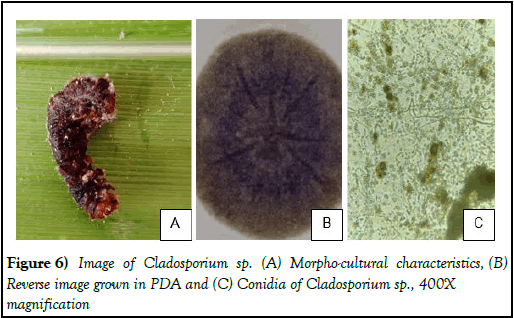
Figure 6) Image of Cladosporium sp. (A) Morpho-cultural characteristics, (B) Reverse image grown in PDA and (C) Conidia of Cladosporium sp., 400X magnification
Furthermore, observations of fungal colonization confirm post-infection establishment, as seen in other successful biocontrol programs. Extensive fungal growth in cadavers treated with M. anisopliae, B. bassiana, and Nomuraea sp. supports their viability for large-scale application. Similar findings in Brazil, where M. anisopliae is used to treat approximately one million hectares, and in China, where B. bassiana was applied annually to over one million hectares, validate the potential scalability of EF-based FAW management. However, challenges in commercialization, farmer adoption, and product availability must be addressed to ensure long-term success.
For EF-based pest management to achieve widespread adoption, efforts must focus on improving formulation techniques, ensuring proper application, and addressing commercialization barriers. The findings of our study contribute to these efforts by providing empirical data supporting the efficacy of certain fungal strains, further advocating their role in sustainable agricultural practices. Continued research and investment in mycoinsecticides could enhance their success, reducing reliance on chemical pesticides and promoting environmentally responsible pest control strategies.
Mode of action of EPF isolates
M. anisopliae infects fall armyworm larvae through the attachment of its conidia (spores) to the insect's cuticle. Upon contact, the spores germinate and produce enzymes, such as chitinase, which break down the larvae's exoskeleton, allowing the fungus to penetrate the cuticle. Once inside, M. anisopliae grows and spreads throughout the body, causing systemic infection. As the fungus proliferates, it releases toxins that damage internal organs, ultimately leading to the death of the larvae. This infection process is highly virulent, as it disrupts the larvae’s physiological processes and weakens its immune system, causing rapid mortality.
B. bassiana works similarly to M. anisopliae. Its conidia attach to the cuticle of the fall armyworm larvae and germinate upon contact. The fungus secretes enzymes that degrade the cuticle, allowing the fungal hyphae to invade the insect's body. B. bassiana then proliferates inside the larvae, spreading throughout its tissues. The fungus releases various toxic substances that further compromise the larvae’s internal systems, leading to a systemic infection and eventual death. B. bassiana is particularly known for its efficiency in killing pests like FAW larvae by exploiting both its enzymatic and toxic properties.
Aspergillus sp., although not primarily an entomopathogen, can still infect FAW larvae in certain conditions. When Aspergillus sp. spores land on the larvae, they germinate and begin to produce mycotoxins such as aflatoxins. These toxins are absorbed by the larvae and disrupt their internal systems, weakening their health. While Aspergillus sp. may not directly penetrate the larvae’s cuticle in the same way as M. anisopliae or B. bassiana, the mycotoxins cause gradual deterioration and can be lethal to the larvae over time. Aspergillus sp. can therefore contribute to the death of the larvae by weakening its immune system and disrupting its digestive and metabolic functions.
According to M Visalakshi, et al., Nomuraea sp. infects FAW larvae in a manner similar to M. anisopliae and B. bassiana. Conidia of Nomuraea sp. attach to the larvae’s cuticle, where they germinate and produce enzymes that break down the cuticle, allowing the fungus to penetrate the insect’s body. Once inside, the fungus proliferates and spreads throughout the larvae’s internal organs, causing systemic damage. The fungal growth disrupts vital processes, and the larvae's tissues are consumed by the fungus, eventually leading to the larvae’s death. Nomuraea sp. is an effective biocontrol agent, as it can rapidly infect and kill fall armyworm larvae.
Cladosporium sp., while less commonly used in pest control, can also infect FAW larvae by attaching its spores to the insect's cuticle. The spores then germinate and secrete enzymes that break down the exoskeleton, allowing the fungus to invade the body. Once inside, Cladosporium sp. proliferates, causing systemic infection and internal damage to the larvae. Although Cladosporium sp. is not as widely used or as effective as other EPF, it can still contribute to the death of the larvae by weakening its immune system and causing internal destruction, eventually leading to mortality.
Pathogenicity of EPF isolates against Fall Armyworm (FAW) larvae
The pathogenicity test of various EPF against FAW larvae (Table 9) demonstrated significant variations in fungal effectiveness. Among the tested fungi, M. anisopliae exhibited the highest mortality rate (80%) within three to four days, followed by B. bassiana with 70% mortality within the same period. These results confirm the strong EPF potential of these species, as observed in previous studies. Their rapid infection rates and extensive fungal colonization suggest their viability as EPF.
Nomuraea sp. showed moderate pathogenicity, causing 60% mortality after four to five days, reinforcing its potential use in FAW management. However, Cladosporium sp. has 20% mortality of four to five days. Aspergillus sp. (10% mortality) demonstrated lower effectiveness, requiring five days to cause mortality in the affected larvae. The lower virulence of these fungi may be attributed to weaker enzymatic degradation or slower sporulation rates.
Control groups exhibited 0% mortality, validating the necessity of fungal exposure for infection establishment. Observations of infected cadavers indicated extensive fungal growth in larvae treated with M. anisopliae, B. bassiana, and Nomuraea sp. White fungal growth was particularly prominent in B. bassiana, while Nomuraea sp. developed characteristic mycosis. The limited fungal colonization in Cladosporium sp. and Aspergillus sp. infections indicates reduced pathogenicity, potentially due to weaker EPF traits.
These findings reinforce the efficacy of M. anisopliae, B. bassiana, and Nomuraea sp. in FAW control, aligning with prior research highlighting their ability to infect and kill insect pests efficiently. Further studies on optimizing fungal applications, including spore concentration and environmental conditions, could improve their field performance for sustainable pest management.
| EPF | Pathogenicity (-/+) | Mortality (%) | Time to death (days) | Observation | Post-infection confirmation |
| M. anisopliae | + | 80 | 3-4 | Mycelial growth on cadavers | + |
| B. bassiana | + | 70 | 3-4 | White fungal growth on larvae | + |
| Aspergillus sp. | + | 10 | 5 | Limited infection | + |
| Nomuraea sp. | + | 60 | 4-5 | Mycosis observed | + |
| Cladosporium sp. | + | 20 | 4-5 | Limited infection | + |
| Control (No EPF application) | - | 0 | N/A | No fungal growth | - |
TABLE 9 Pathogenicity of EPF isolates against fall armyworm larvae
Observations on infection progression
Post-infection confirmation revealed extensive fungal colonization in cadavers treated with M. anisopliae, B. bassiana, and Nomuraea sp., supporting their rapid pathogenicity. White fungal growth in B. bassiana and mycosis in Nomuraea sp. serve as indicators of infection establishment. In contrast, Aspergillus sp. and Cladosporium sp. exhibited minimal growth, suggesting limited virulence due to weaker enzymatic degradation or slower sporulation.
Percent mortality of FAW larvae across six days
Using different EPF isolates: The pathogenicity of various EPF isolates on FAW larvae over a 6-day period. M. anisopliae showed a noticeable infection by Day 2 with 20% infected larvae, and reached a peak of 80% infected larvae by Day 4. However, the infection rate remained stable thereafter, indicating that the fungus had a rapid but contained impact on the larvae. B. bassiana followed a similar trend, with 30% larvae infected by Day 2 and increased to 70%. In contrast, Aspergillus sp. exhibited a slower onset of infection, with no larvae affected until Day 4, when 10% larva showed signs of infection. This indicates that Aspergillus sp. may have a delayed action compared to other EPFs. Nomuraea sp. displayed a more consistent infection pattern, with 30% larvae infected by Day 4 and Day 5 60%, indicating a moderate to high virulence. Cladosporium sp. also showed a slow virulence, with only 10% infected larva recorded on Days 4 and 5, suggesting lower virulence compared to other isolates. The control group, which received no EPF application, showed no infection, confirming that the observed infections were exclusively due to the EPF treatments. Overall, M. anisopliae and B. bassiana were the most virulent in causing rapid infection, while Nomuraea sp. showed moderate and consistent infection, and Aspergillus sp. and Cladosporium sp. had slower or less effective impacts (Figure 7).
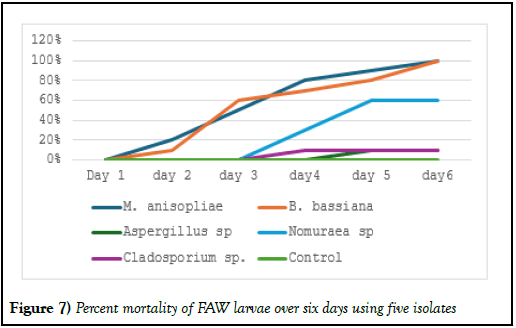
Figure 7) Percent mortality of FAW larvae over six days using five isolates
Farmers in the Zamboanga peninsula have developed strong awareness, knowledge, and technical proficiency in the use of EPF such as M. anisopliae and B. bassiana for managing Fall Armyworm (FAW). Despite limited education, low income, and land constraints, their high knowledge, practice, and perception levels highlight the effectiveness of sustained training and support from the Regional Crop Protection Center (RCPC). The full adoption of EPF among farmer-respondents signifies successful transition toward environmentally friendly and sustainable pest management strategies. The widespread preference for M. anisopliae over B. bassiana reflects both field-based performance and farmer experience. Adoption was driven not by policy mandates, but by the demonstrated effectiveness and ecological safety of these EPF, as well as strong extension recommendations.
Field assessments confirmed that EPF significantly reduced FAW populations in treated plots, as evidenced by higher larval mortality, mummification, and isolation rates compared to control groups. The fieldlevel mortality rates of both EPF species indicate their active infection and persistence under natural conditions, validating their practical application for managing FAW infestations.
The study confirms that M. anisopliae, B. bassiana, and Nomuraea sp. are highly effective EPF for the control of FAW larvae. M. anisopliae demonstrated the highest pathogenicity, with an 80% mortality rate within three to four days, followed by B. bassiana at 70%. Nomuraea sp. showed moderate efficacy, with a 60% mortality rate. These fungi exhibited rapid infection rates and extensive fungal colonization, supporting their potential as viable EPF for FAW management. In contrast, Cladosporium sp. and Aspergillus sp. demonstrated significantly lower pathogenicity, with minimal fungal growth and reduced mortality. The findings underscore the importance of selecting effective fungal species and optimizing their application conditions for improved pest management. Further research is necessary to refine application methods, including spore concentration and environmental factors, to enhance their field performance and sustainability in controlling FAW.
[Crossref] [Google Scholar] [PubMed]
[Crossref] [Google Scholar] [PubMed]
[Crossref] [Google Scholar] [PubMed]
[Crossref] [Google Scholar] [PubMed]
Received: 30-Mar-2026, Manuscript No. AGBIR-26-187245; , Pre QC No. AGBIR-26-187245 (PQ); Editor assigned: 01-Apr-2026, Pre QC No. AGBIR-26-187245 (PQ); Reviewed: 15-Apr-2026, QC No. AGBIR-26-187245; Revised: 23-Apr-2026, Manuscript No. AGBIR-26-187245 (R); Published: 30-Apr-2026, DOI: 10.37532/0970-1907.26.42(1):1-13